
🪈👣 When Krishna Comes Home
Janmashtami and the intimacy of loving the Divine as a child
❤️ Stories of Devotion
There is something wonderfully tender about drawing the tiny footprints of Krishna
at the entrance of a home.
They begin at the threshold and travel inward—little feet leading into the house,
toward the puja room, the altar, the place where the family has prepared to receive Him.
As children, perhaps we simply delight in how tiny they are.
Years later, we may find ourselves kneeling at our own doorway drawing those same little feet.
We dress our children as Krishna, place a flute in their hands,
straighten a peacock feather that refuses to stay where it belongs,
and watch divine dignity disappear entirely as a toddler runs through the house. 😊🪈💙
I remember doing exactly that with my own son when he was little.
At the time, I think I saw mostly the sweetness of it.
Today, I see something more.
On Janmashtami, we do not merely go looking for God.
We make a path for Him to come home.
And knowing Krishna, there is very little chance He intends to stay obediently
where those footprints lead Him. 😂🧈
🪷 👣
“Somewhere between the tiny footprints at the door and the flute heard within,
the Divine stops feeling distant.
Krishna has come home."
🌿 The God Who Became a Child
The story of Janmashtami begins under extraordinary circumstances.
Krishna is born to Devaki and Vasudeva in Mathura, under the shadow of the tyrant Kamsa.
To protect the newborn child, Vasudeva carries Him through the night across the Yamuna to Gokul,
where Krishna grows up in the loving household of Yashoda and Nanda.
Krishna's birth is also understood as avirbhava—a Divine manifestation,
a making-visible of what is eternal.
He does not become Divine because He is born.
The Divine chooses to become visible as a child.
And perhaps that is where the grandeur of theology meets the tenderness of the home.
The theological story says the Divine has incarnated.
The household experience says :
There is a baby in the house.
And babies must be held.
Fed.
Dressed.
Sung to.
Worried over.
Fussed over.
And loved with the peculiar tenderness that asks for
nothing grander than the privilege
of caring for them.
❤️
Which brings us to Yashoda.
🪈 Yashoda and the Extraordinary Permission to Mother God
One of the relationships I love most in Krishna's story
is his relationship with Yashoda.
Yashoda does not spend Krishna's childhood maintaining a
suitably reverential distance from Vishnu. 😊
She mothers him.
She feeds him.
Carries him on her hip.
Worries about him.
Chases him when he is naughty.
Corrects him.
Protects him.
Delights in him.
And Krishna allows himself to be loved this way.
In the devotional tradition, this loving relationship with the Divine
as one's own child
is often described as vatsalya bhava—
devotion expressed through parental tenderness.
But perhaps the most astonishing part is not simply that Yashoda
was permitted to love God.
It is that God allowed Himself to become small enough for Yashoda
to love Him as her child.
Small enough to be carried on a hip.
Small enough to be fed by hand.
Small enough to be sung to sleep.
Small enough to be shown the moon.
🌙💙
Yashoda and little Krishna —
the Divine held in the intimacy of a mother's love.

Photo by Stirred By Spice
🪷 👣 For One Evening, a Little of Yashoda's Joy
Perhaps this is why the tiny footprints at Janmashtami
have always moved me.
In many homes, little Krishna feet are drawn from the entrance inward as a symbolic welcome:
child Krishna is entering the house.
And when there are young children at home, the story sometimes becomes wonderfully literal.
Little ones become Krishna.
There are tiny dhotis, anklets, flutes, flowers and peacock feathers—
and inevitably at least one carefully arranged costume
that does not remain carefully arranged for very long. 😊 🦚🪈
Years ago, my own little boy wandered through our home
as I had dressed him up as Krishna.
I could not have articulated it this way then, but now I wonder whether these traditions
offer us something extraordinarily tender:
For one evening, every mother is allowed a little of Yashoda's joy.
Perhaps this is also how traditions travel so quietly through generations.
Someone once drew the footprints for us.
One day, we draw them for our child.
We think we are repeating a ritual.
Only later do we realize that we have become part of its memory.
🪷 👣
🧈 🧉 Have You Eaten?
Of course, no story about Krishna the child, can remain solemn for terribly long.
Krishna himself seems determined to prevent it. 😂
Enter Makhan Chor—the beloved butter thief.
The little boy who steals butter, raids pots, conspires with his friends
and charms his way through Gokul
has occupied the devotional imagination for generations.
And beneath all those stories of butter and milk is something wonderfully human.
We feed those we love.
It is such an instinctive language of care that sometimes love itself sounds remarkably like:
“Have you eaten?” ❤️
Perhaps that is why food feels so natural in Krishna devotion.
When God becomes a child, we do what generations of families have done
for the children they love.
We feed Him.
Although in Krishna's case, apparently not quickly enough
to prevent Him from helping himself. 😂 🧈💙
༗🪈
🌙 Waiting for Krishna
Janmashtami carries another kind of tenderness too:
waiting.
In many traditions, devotees fast, sing bhajans, recite prayers, decorate their homes
and prepare special foods as midnight approaches—
the hour associated with Krishna's birth.
There is something different about waiting for a birth.
The house knows someone is coming.
Lamps are lit.
Songs fill the hours.
The kitchen is busy.
Food waits.
And the ordinary clock becomes sacred because everyone is waiting
for someone beloved to arrive.
There is something meaningful, too, about Krishna's birth being remembered
in the deepest hours of the night.
Midnight—Nishita Kala—is an hour of stillness.
The activity of the day has receded.
The world outside has quietened, and darkness has drawn its curtain
around almost everything familiar.
Yet Krishna's story does not ask us to understand that darkness simply as
something frightening or empty.
It is into the darkness that the Divine appears.
Krishna is born not after the night has passed, but within it.
There is something profoundly hopeful in that image.
We do not always have to wait for everything around us to become bright
before something sacred can begin.
Sometimes it is precisely when the outer world has grown quiet—
when there is little left to distract us—that we become able to recognize what is arriving.
And perhaps that is part of the beauty of waiting until midnight on Janmashtami.
We are not merely watching the clock.
We are keeping vigil for the moment when darkness makes room for Divine presence.
Then midnight comes.
The waiting ends.
Krishna is born. 👣 💙
༗🪈💙
🍚 What We Place Before Krishna
And naturally, somewhere in all this waiting, there is a kitchen.
Because Janmashtami is not only remembered through stories and songs.
In homes across India and the diaspora, it is also expressed
through food prepared especially for Krishna.
The particular dishes vary beautifully from region to region and family to family.
Milk, butter and curd carry an obvious affection for the little Makhan Chor.
Depending on the tradition, Janmashtami offerings may also include
fruits, sweets, aval or poha, payasam or kheer, seedai and other foods associated with Krishna
or with the customs of a particular household.
But what matters is not simply the menu.
Food prepared for worship is placed before the Divine as naivedyam—
an offering made before we ourselves partake of it.
And what has been offered is then received as prasadam.
There is a beautiful movement within that simple act:
We prepare.
We offer.
We receive.
We share.
The kitchen and the altar are no longer separate worlds.
Something made with our own hands becomes a way of participating in the celebration.
And perhaps that is the most natural place for a food story like this one to lead:
into the kitchen.
If you would like to welcome Krishna through food, the Janmashtami recipes gathered here
are an invitation to prepare something for Him in your own home.
🍚 Sweet Aval /
Bajjeel
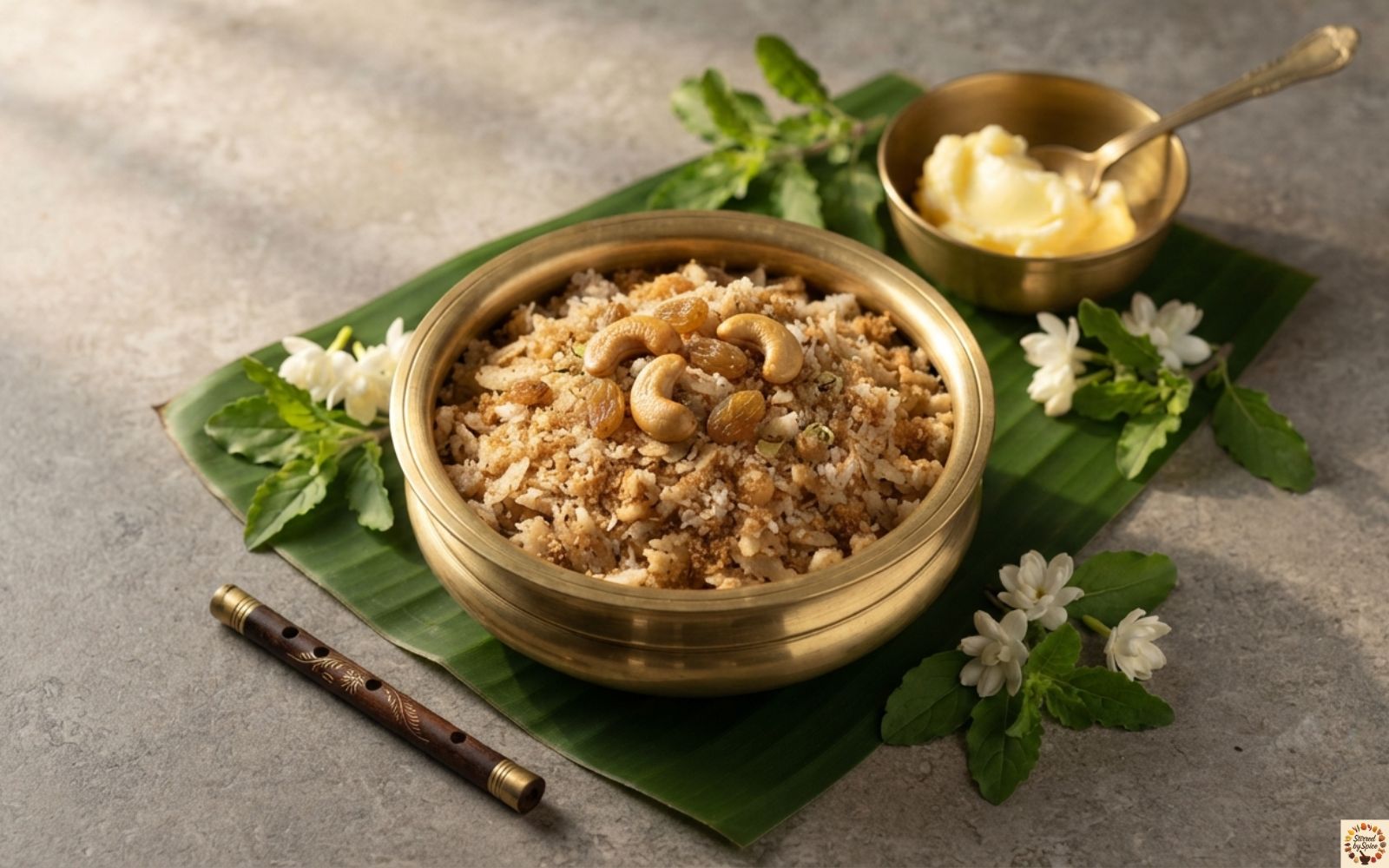
A humble blend of aval, coconut, and jaggery lovingly prepared as one of Krishna's most cherished Janmashtami offerings.
🧈 Fresh Homemade
Butter (Vennai)
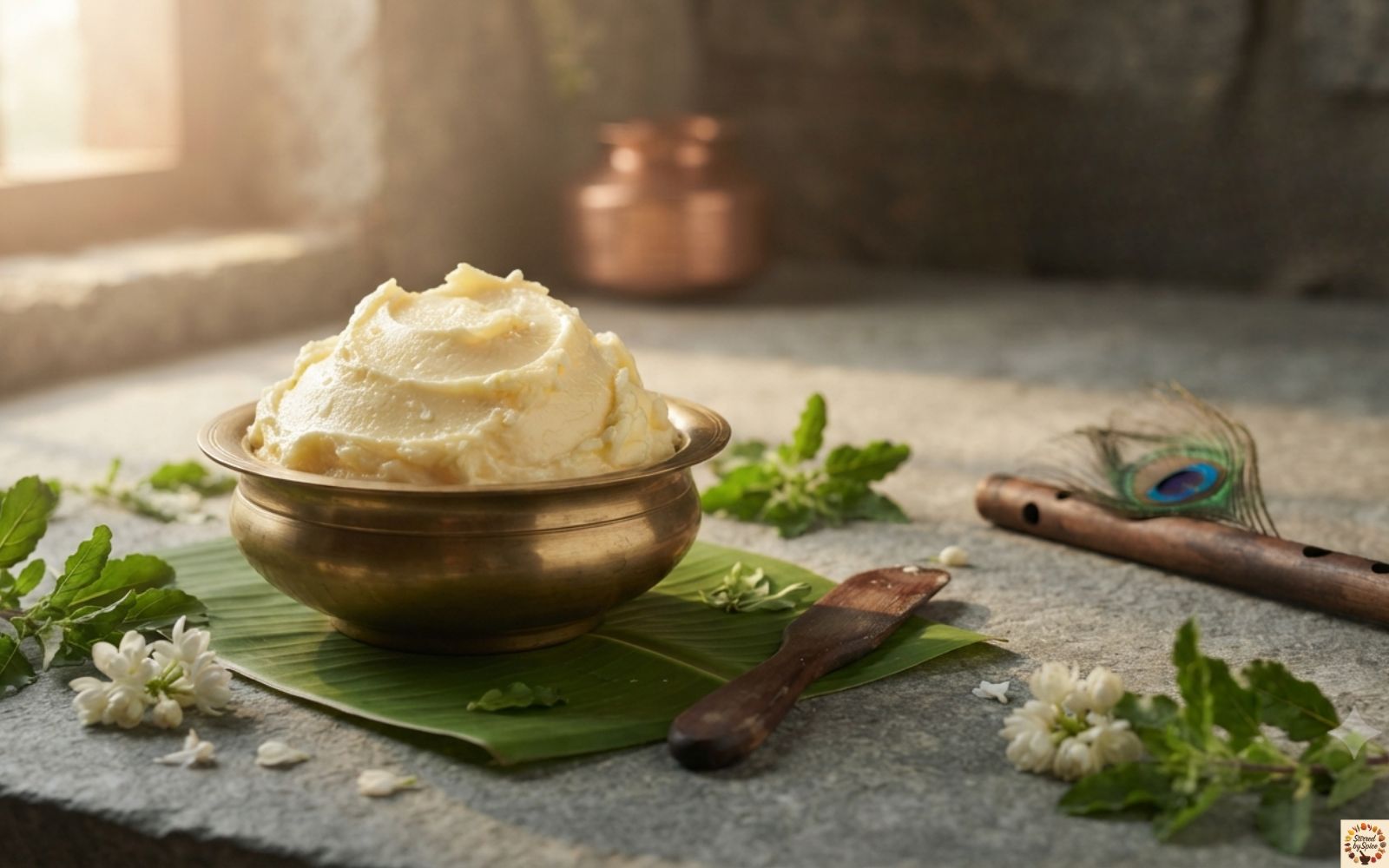
Freshly churned butter lovingly prepared as Krishna's most cherished naivedhyam, celebrating simplicity, joy, and devotion.
🥣 Aval
(Poha)
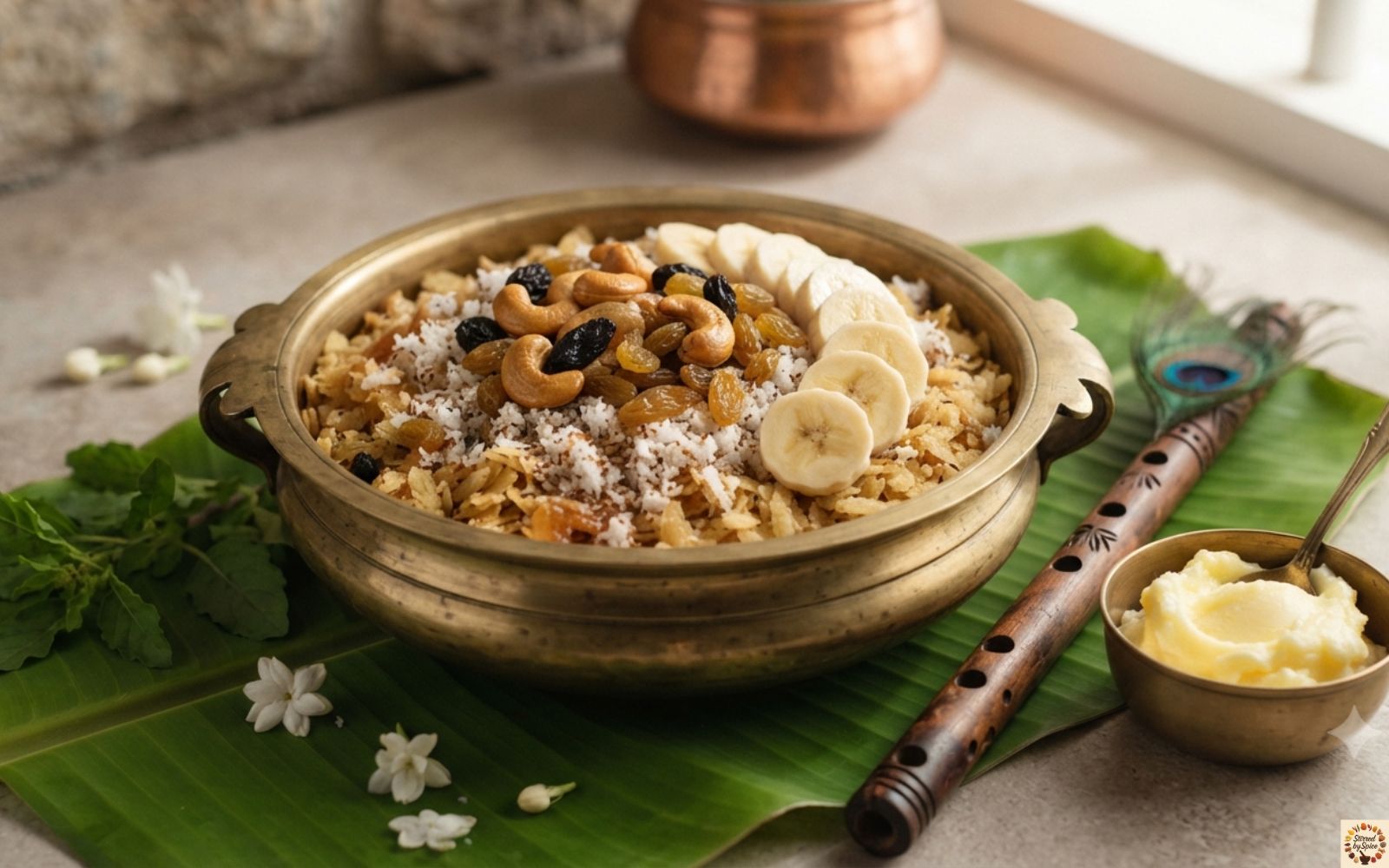
A simple South Indian naivedhyam of softened aval, coconut & jaggery, prepared to honor Krishna's cherished friendship with Sudama.
🥥 Aval Urundai
(Aval Ladoo)
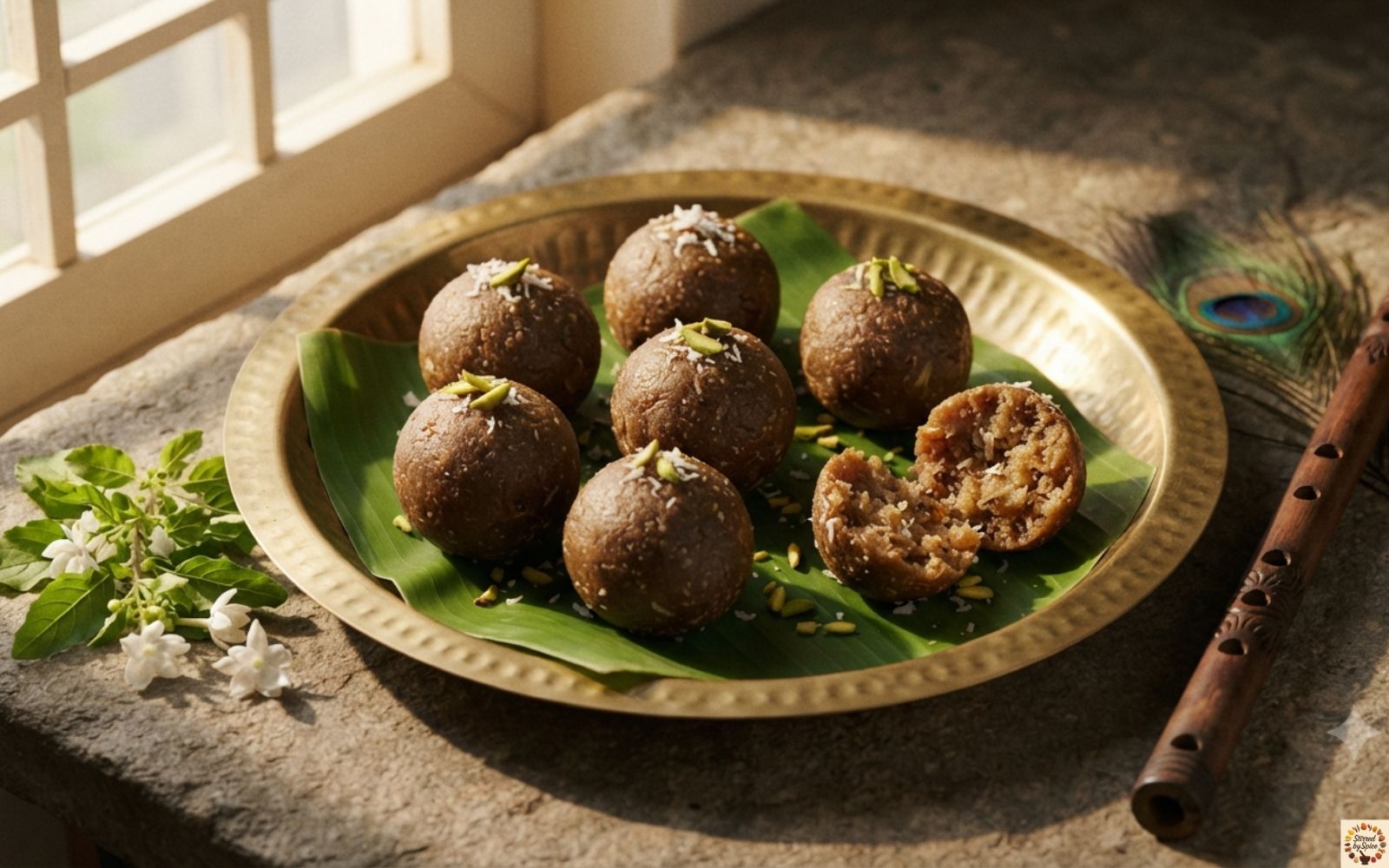
Soft coconut and jaggery aval ladoos lovingly rolled by hand as a cherished Krishna Janmashtami naivedhyam.
🥣 Pal Payasam
(Sacred Offerings)
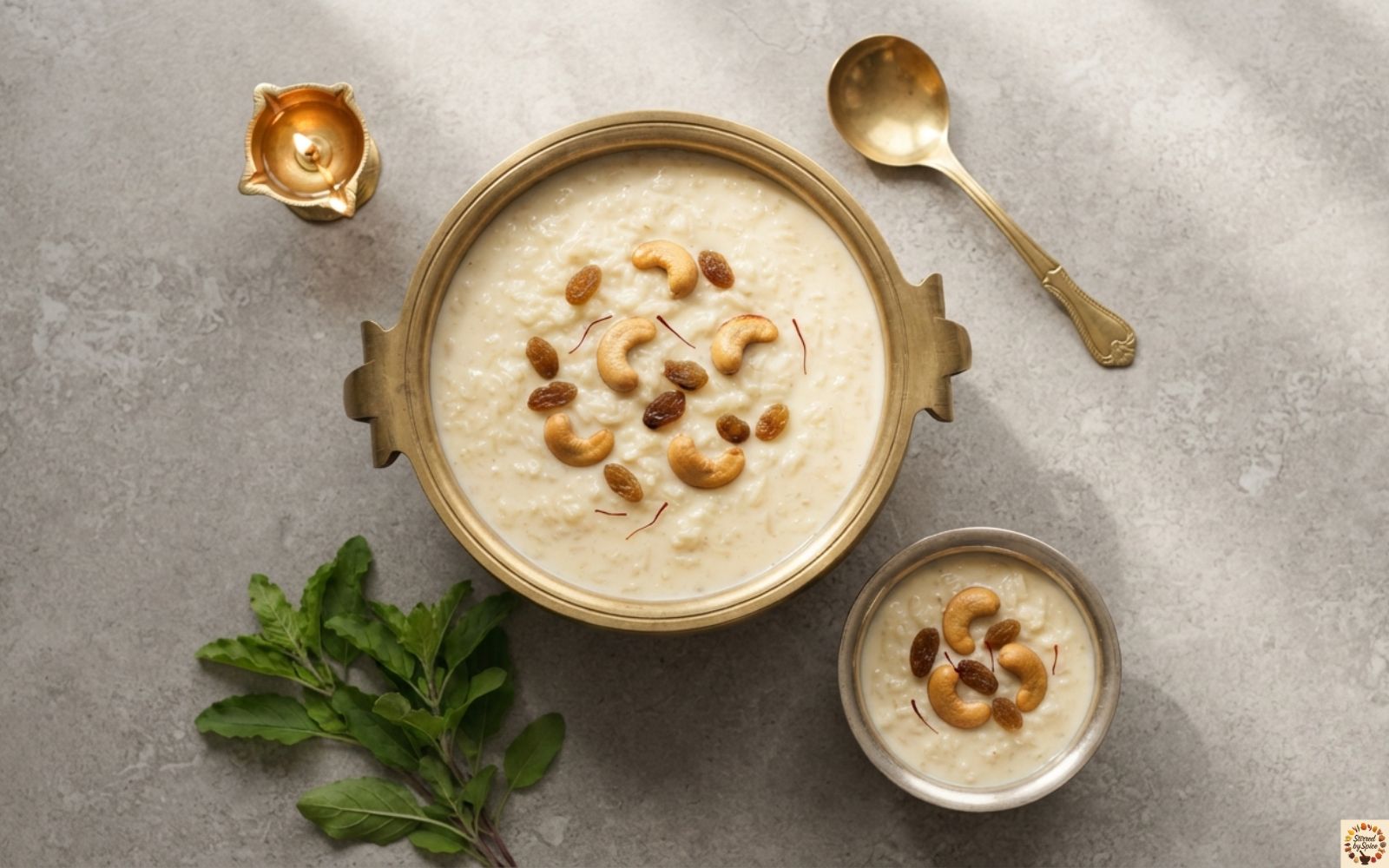
A timeless South Indian rice pudding gently simmered with milk, rice, and cardamom—
one of the most cherished temple offerings.
🥛 Milk Peda /
Palkova
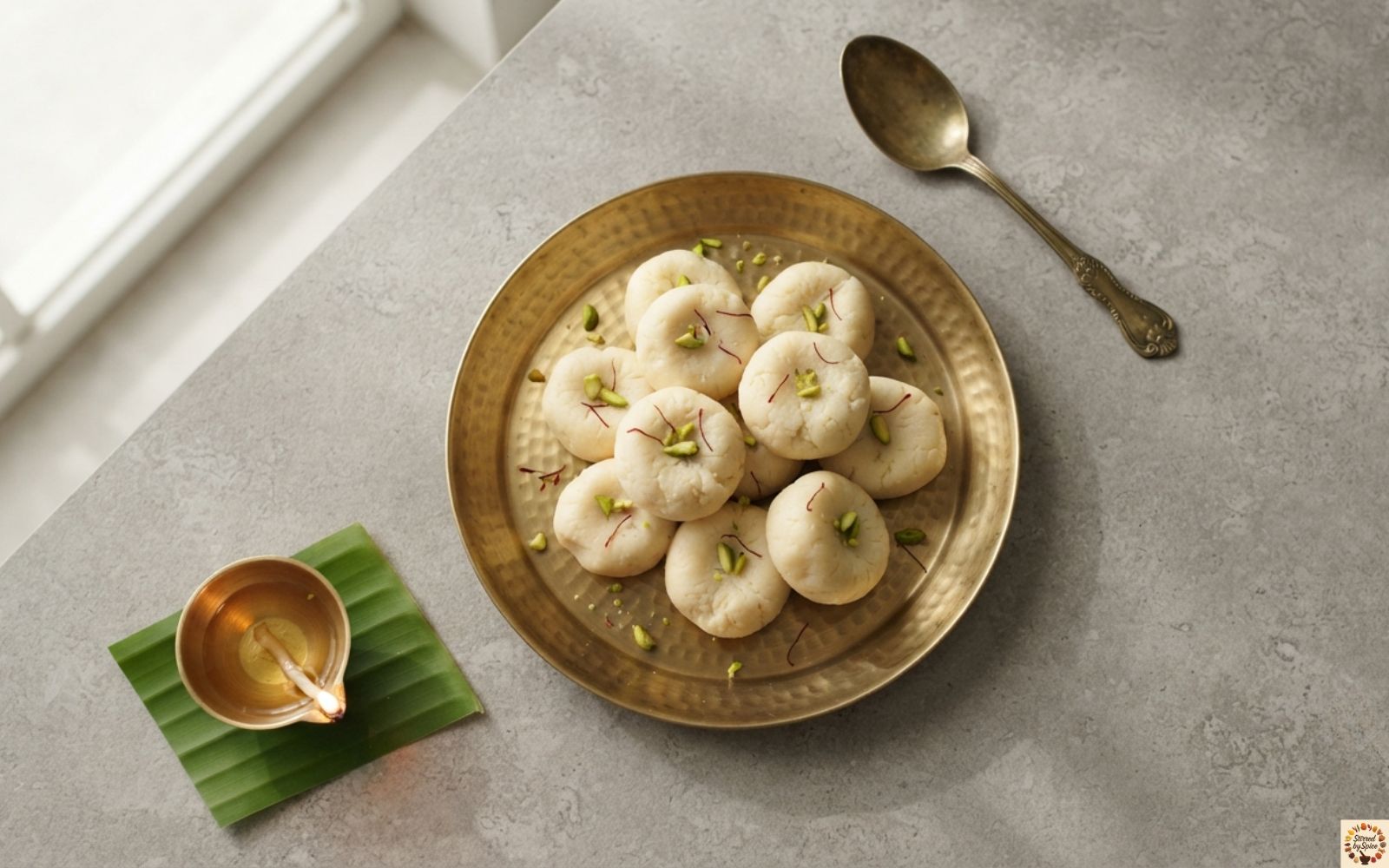
A rich, slow-cooked milk sweet lovingly
prepared for temple offerings, festivals,
and joyful family celebrations.
🍌 Nei Appam
(Sweet Appam)
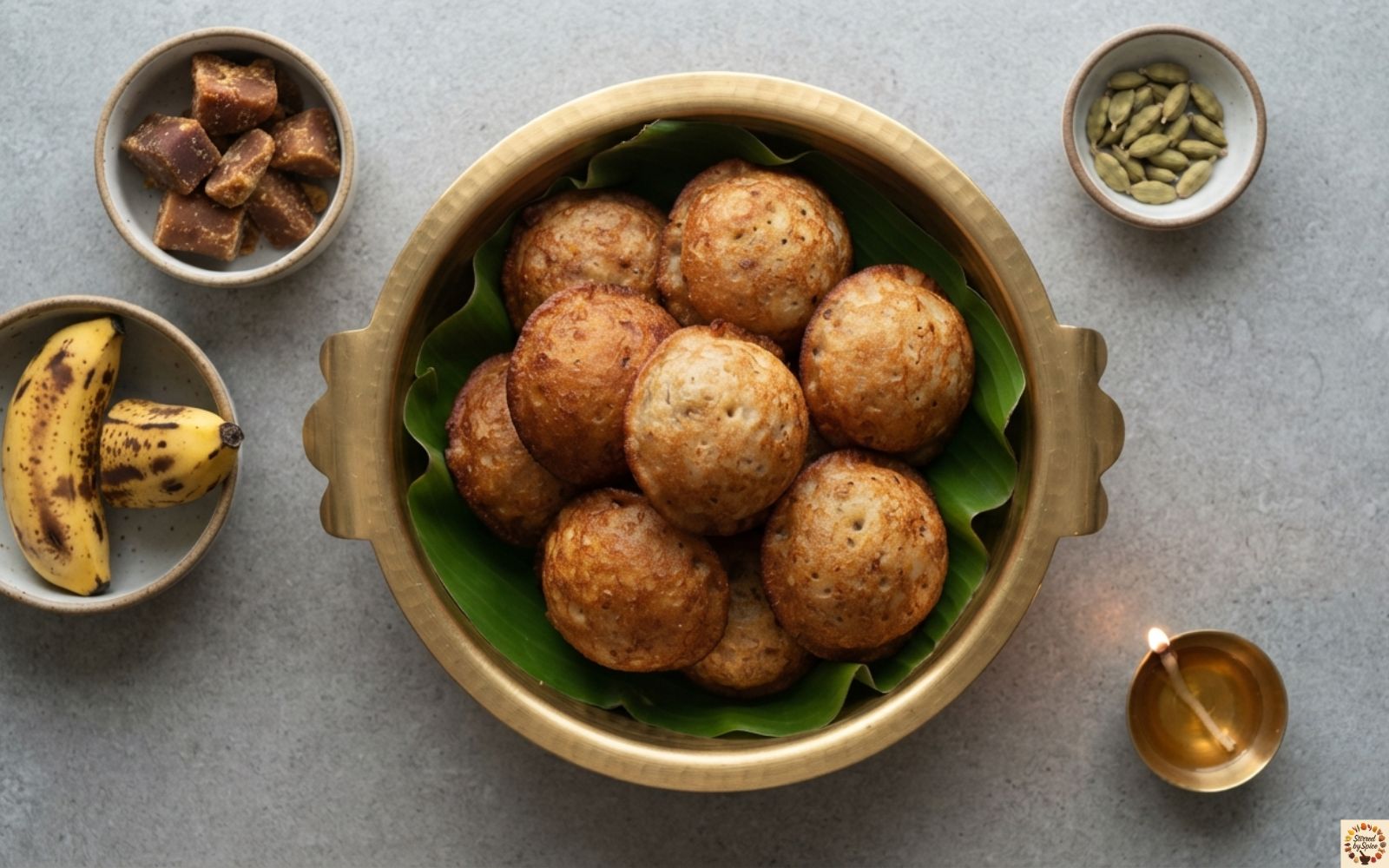
Golden banana and jaggery appams
cherished in South Indian homes
and temples.
🥣 Gulab Jamuns
(Soft Milk Dumplings)
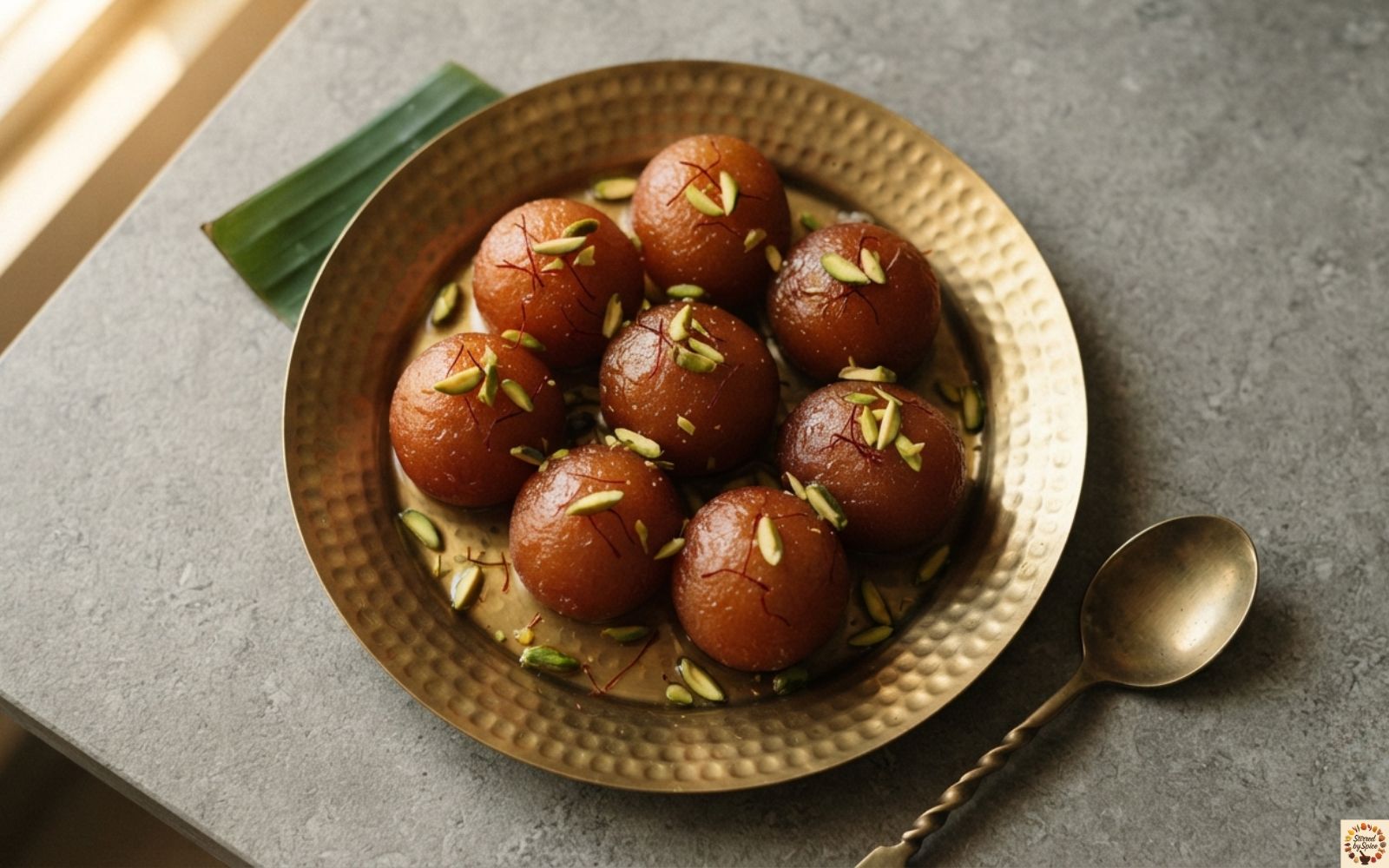
Soft milk dumplings soaked in fragrant
cardamom and rose syrup, perfect for
festivals, family gatherings, and celebration.
🥮 Athirasam
(Traditional Sweet)
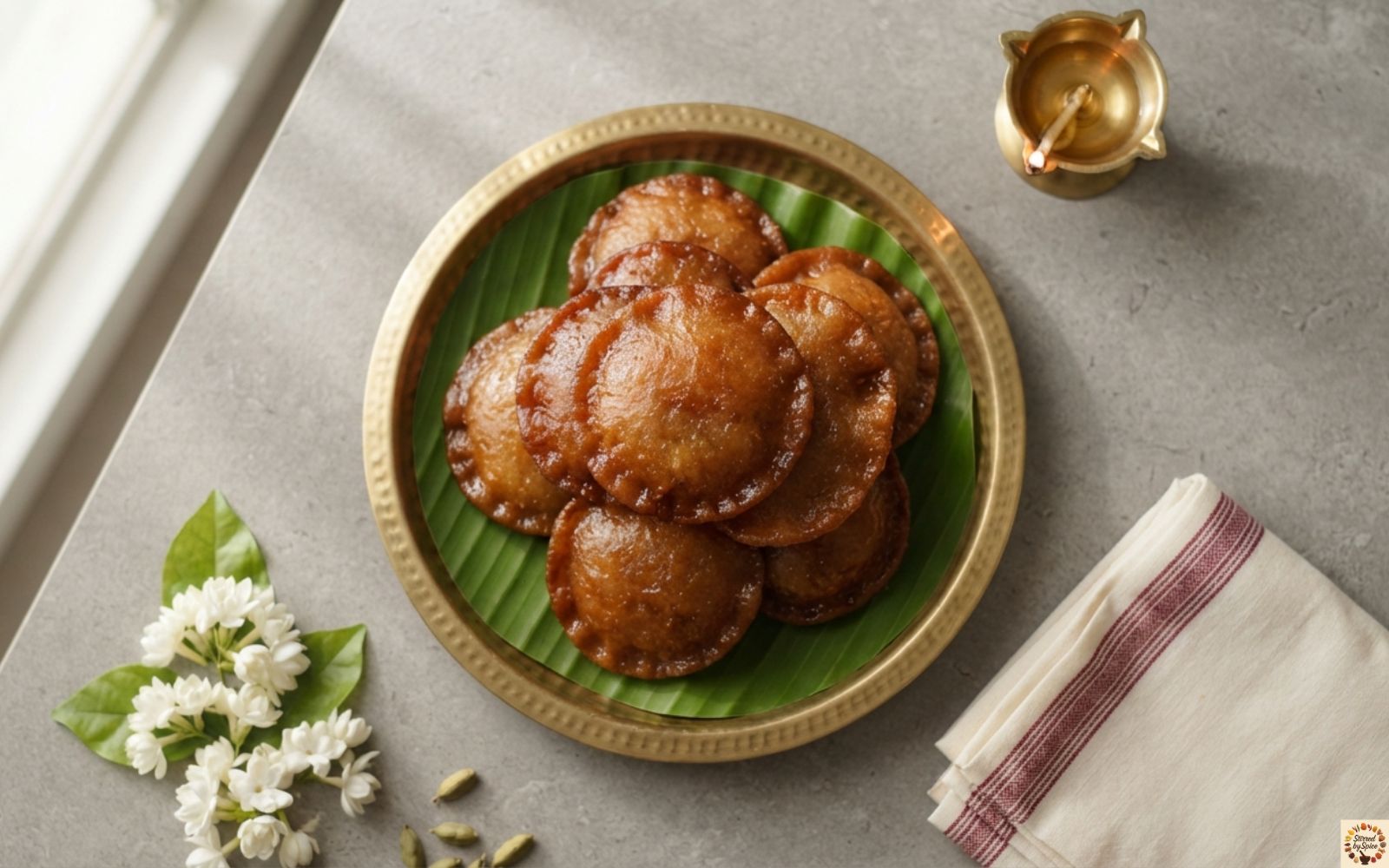
A timeless South Indian sweet made with freshly ground rice flour and jaggery, treasured
during Deepavali & temple offerings.
🍘 Seedai
(Rice Flour Balls)
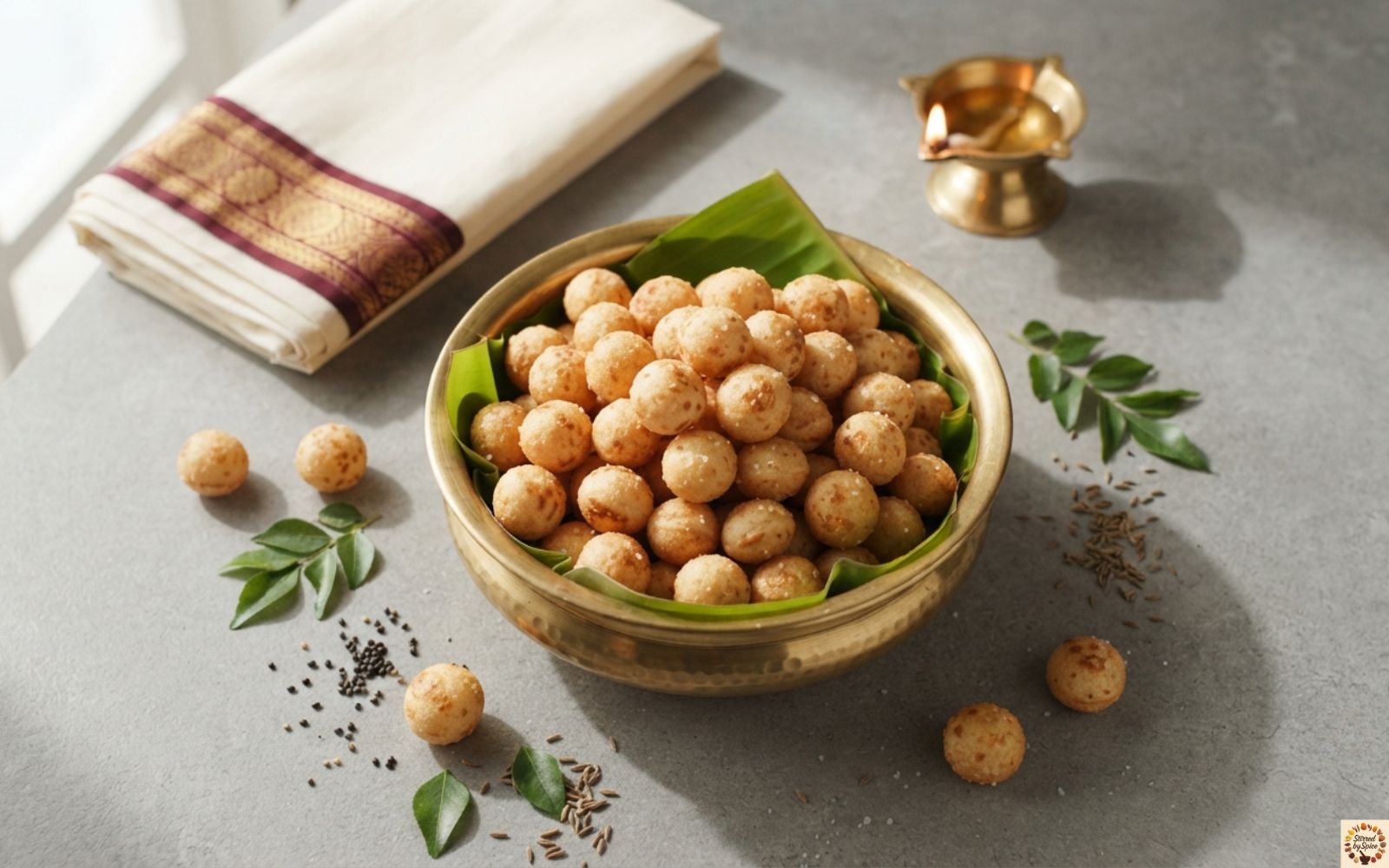
Crispy bite-sized rice flour balls lovingly prepared for Krishna Janmashtami, bringing joyful crunch tradition & celebration.
🍯 Vella Seedai
(Sweet Rice Balls)
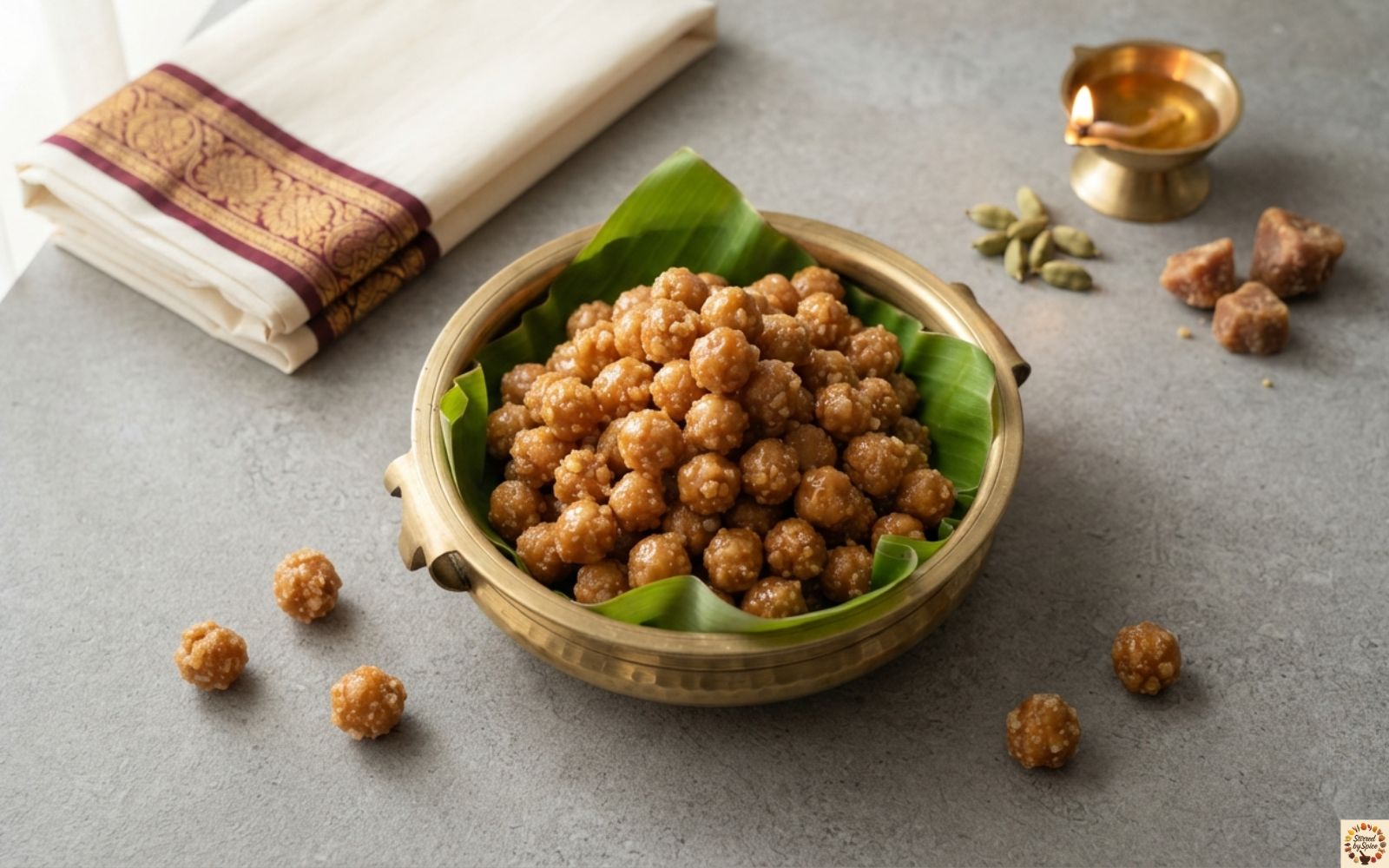
Crispy rice flour balls coated in fragrant
jaggery syrup, lovingly prepared for Krishna Janmashtami and a timeless festive sweet.
🧂 Uppu Seedai
(Savory Rice Balls)
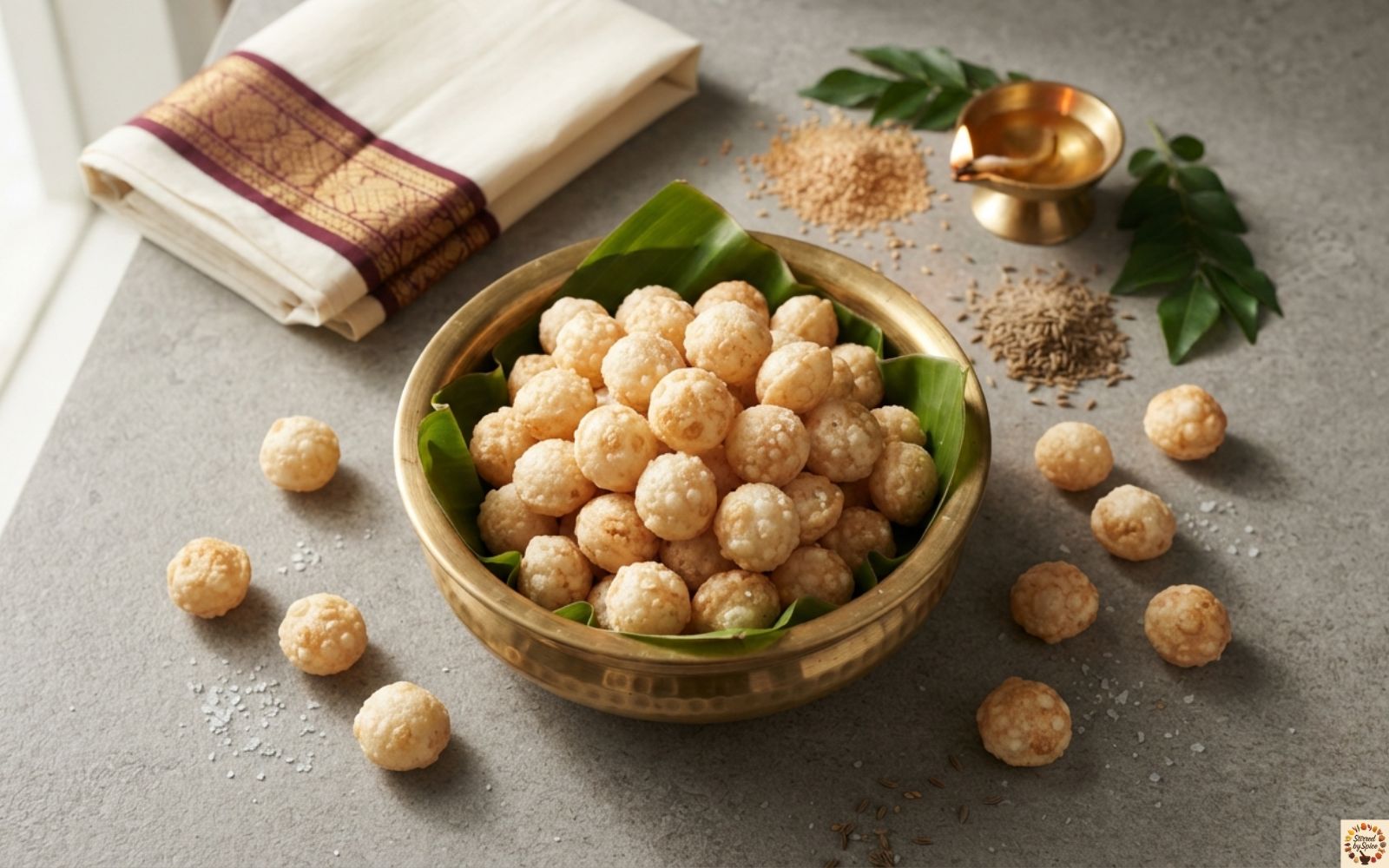
Delicately seasoned crispy rice flour balls traditionally prepared for Krishna Janmashtami, offering a light, savory crunch.
🥨 Murukku /
Chakli
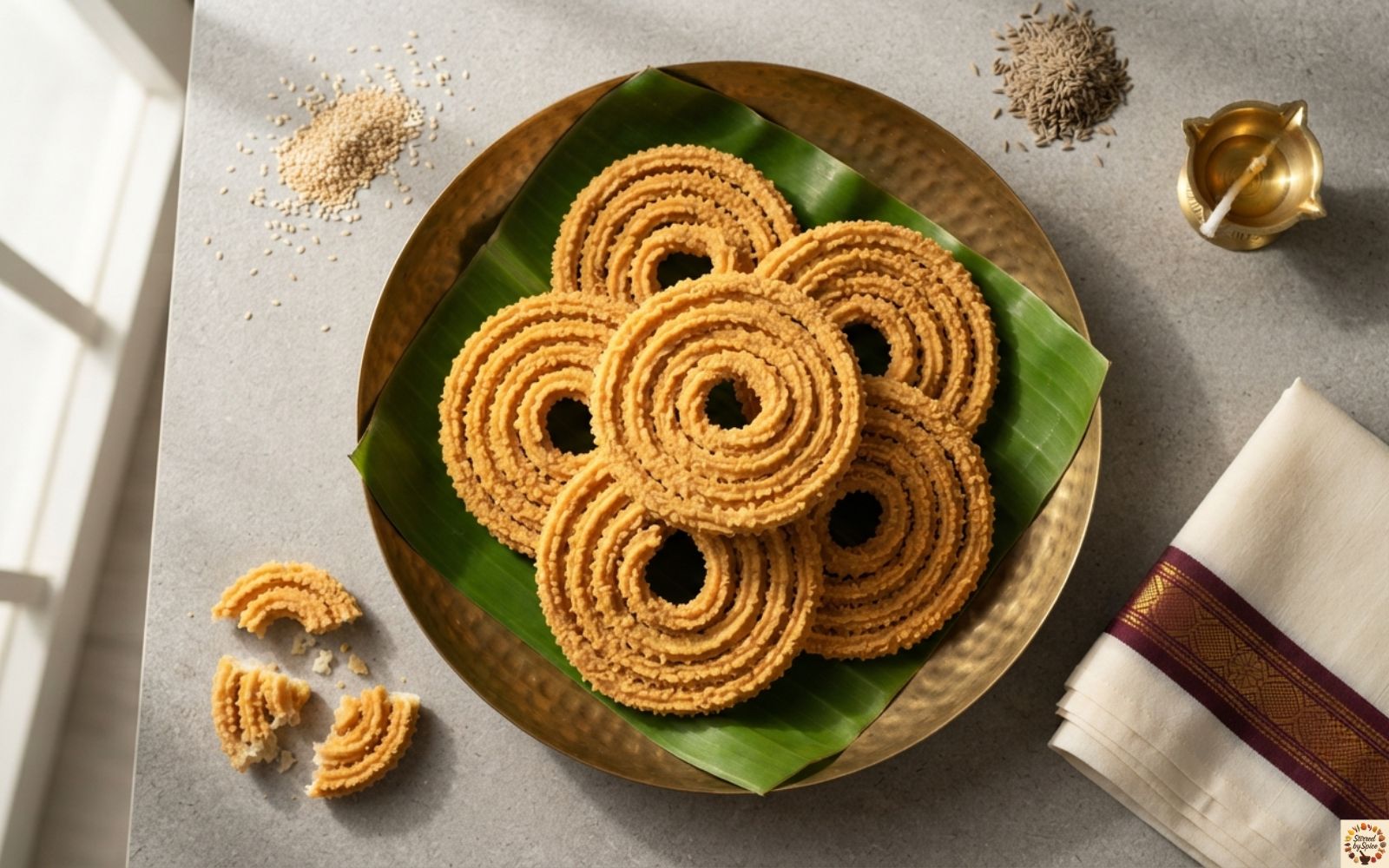
Crispy golden spirals seasoned with sesame and cumin, lovingly prepared for South Indian festivals, celebrations, and tea-time gatherings.
🌾 Thenkuzhal
(Buttery Crispy Coils)
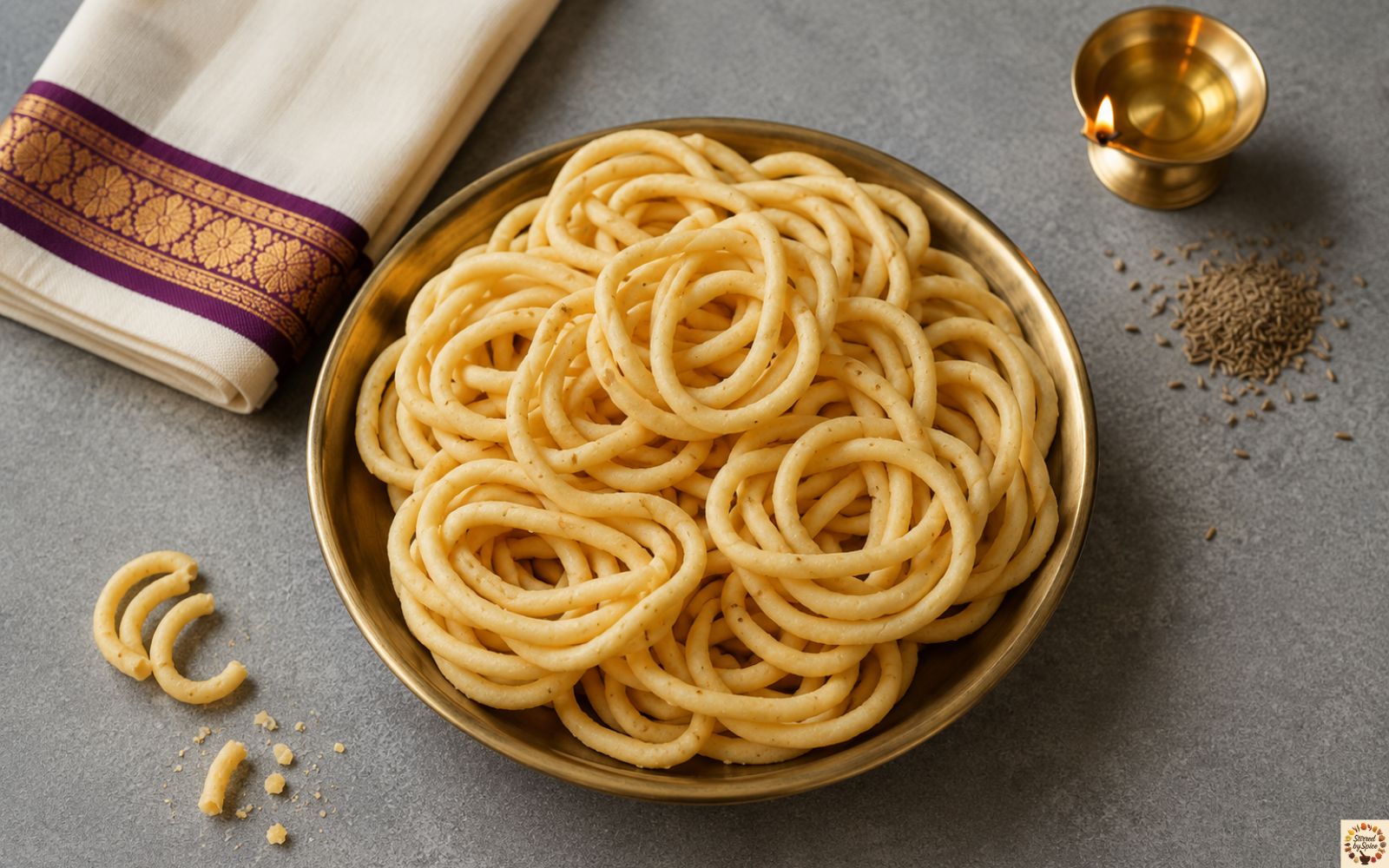
Light, buttery coils with a delicate crispness, lovingly prepared for South Indian festivals, temple offerings, and joyful family gatherings.
🥨 Kodubale
(Spiced Rice Flour Rings)
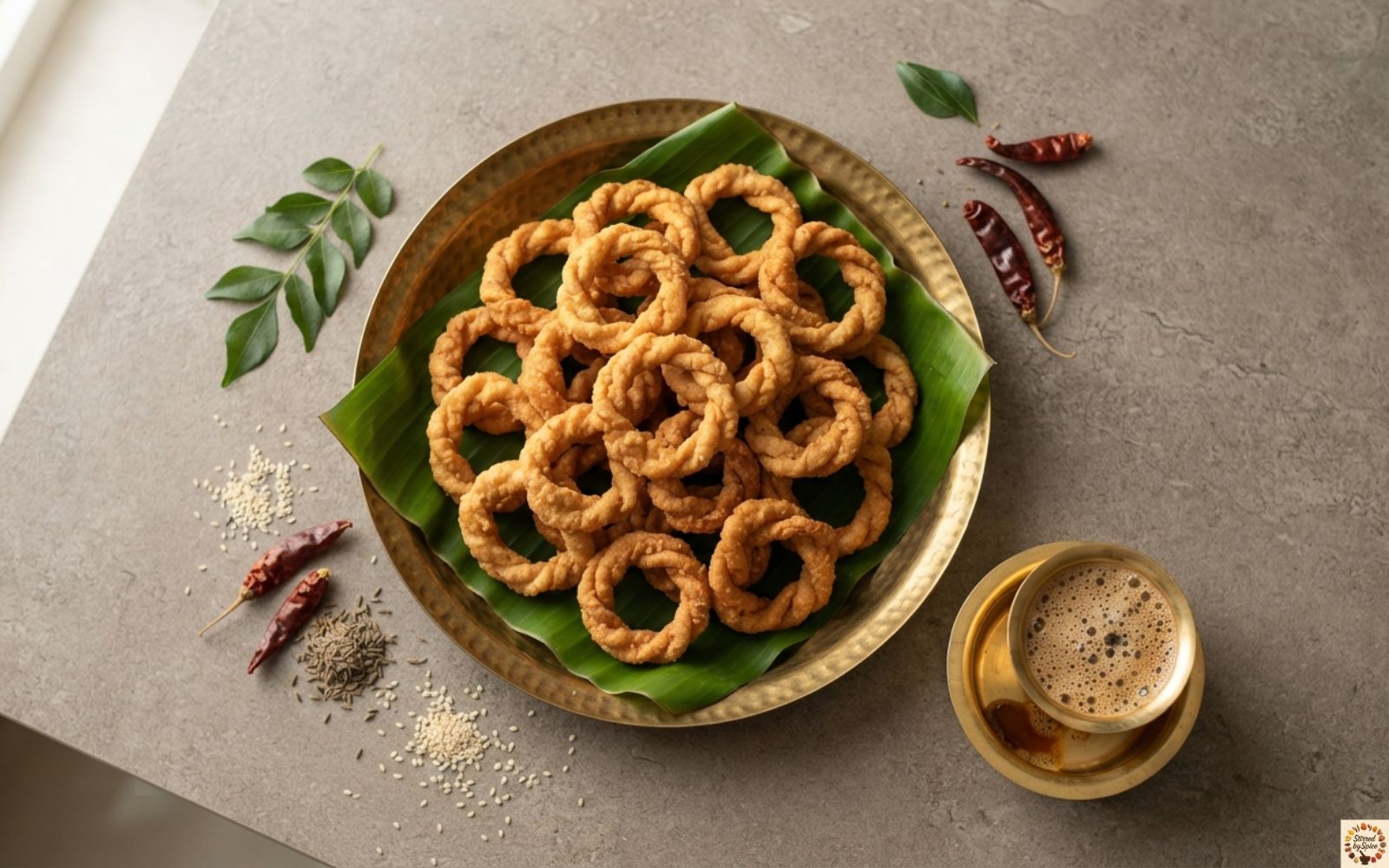
Golden, crunchy rice flour rings seasoned with coconut, cumin, sesame, and curry leaves—a timeless festive Karnataka snack.
Not every kitchen will prepare the same dishes.
It doesn't need to.
There are many ways to set a place for someone beloved. 💙
🌏 One Krishna, Many Homes
Just as the food changes, so does the celebration.
Janmashtami travels through languages, regions, communities and families,
gathering different customs along the way.
In one home there may be tiny footprints leading through the doorway.
In another, elaborate decorations and a beautifully dressed little Krishna.
Some families fast until midnight.
Some sing bhajans or recite sacred texts.
Some prepare recipes handed down through generations.
Communities may gather for temple celebrations, music, dance
and other traditions particular to their region.
Across India and throughout the diaspora, Krishna is welcomed in countless ways.
No single household can represent all of them.
Perhaps it does not need to.
Because underneath the differences lies something wonderfully recognizable:
Someone beloved is coming.
And the house prepares to receive Him.
🪷 👣
🌌 A Glimpse of the Infinite
Every now and then, however, the stories of Krishna's childhood remind us that
this mischievous little boy is not quite an ordinary child.
In one beloved story, Yashoda hears that Krishna
in one of his many mischievous childhood pranks,
has been eating mud.
Like any mother confronting a small child accused of doing precisely what he was told not to do,
she asks him to open his mouth.
And for one extraordinary moment, when he opens his mouth,
she does not see mud.
She sees the universe.
The child standing before her contains something immeasurable—
a glimpse of the Divine reality hidden inside the little boy
she has been feeding, carrying and chasing through Gokul.
And then the moment passes.
Through Krishna's maya, Yashoda returns to the tenderness of motherhood.
The Infinite is once again simply her child.
Perhaps Janmashtami gives us something of that glimpse too.
We know who this child is.
We know that those tiny feet belong to the Krishna who will grow into stories
far larger than this one.
There will be other stories for those other Krishnas.
Today, he is little.
He is Bala Krishna
Today there is a peacock feather in his hair.
A flute nearby.
And perhaps some suspicious evidence of butter on his hands. 😂🧈
Today Yashoda carries him on her hip.
And today, we make a path for Him to come home.
🪷 👣
🪈 When Krishna Comes Home
Years ago, I watched my little boy, then a toddler, wander through our house
when I dressed him up as Krishna.
At the time, perhaps I saw mostly the sweetness of it—the costume, the tiny child,
the familiar story being played out once again.
Years later, I understand something more.
Traditions survive because eventually someone allows us to step inside them.
One generation draws the footprints.
Another follows them.
And someday, without quite realizing when it happened, we find ourselves kneeling at the doorway
drawing those tiny feet for another child.
Perhaps that is why I still love the footprints most.
They do not point toward some distant heaven.
They point into the house.
Into the kitchen.
Into our stories.
Into our songs.
Into our memories.
Into all the ordinary places where love already lives.
Because on Janmashtami, Krishna is not only the Divine we seek.
He is the child we make room for.
The lamp is lit.
The food is waiting.
Somewhere a flute is playing. 🪈
The little footprints have crossed the threshold.
And if a bowl of butter has mysteriously disappeared,
we probably know where to begin looking. 😂🧈💙
Krishna has come home.
Govinda! Gopala! Jai Sri Krishna! 🪈🦚💙🙏
Om Tat Sat. 🌿❤️
🪷 👣
🌼 A Quiet Reflection
Perhaps devotion does not always begin with understanding.
Sometimes it begins with something much smaller—
a story we have heard since childhood,
a song we somehow still remember,
a dish prepared the way someone before us prepared it,
a lamp lit at dusk,
or a pair of tiny footprints drawn toward the door.
We may repeat these things for years before understanding what they have been carrying.
And then one day, perhaps we see it.
Tradition has quietly been teaching us how to make room.
Room at the altar.
Room at the table.
Room in our stories.
Room in our lives.
Perhaps that is one of the gentlest invitations of Janmashtami.
Who—or what—have you been making room for without quite realizing it?
❤️
👣 Walk a Little Further
Is there a tradition from your childhood that means something different to you now than it did then?
Perhaps it is—
a festival you once loved simply for the excitement,
a prayer whose words you learned before you understood them,
a dish someone always prepared,
a song you heard in the background of childhood,
or a small ritual you once followed simply because everyone else did.
Sometimes meaning arrives long after memory.
We grow older, and suddenly something familiar opens.
What once seemed ordinary reveals what it had been carrying all along.
What tradition have you grown into?
❤️
❤️ A Few More Stories to Savor
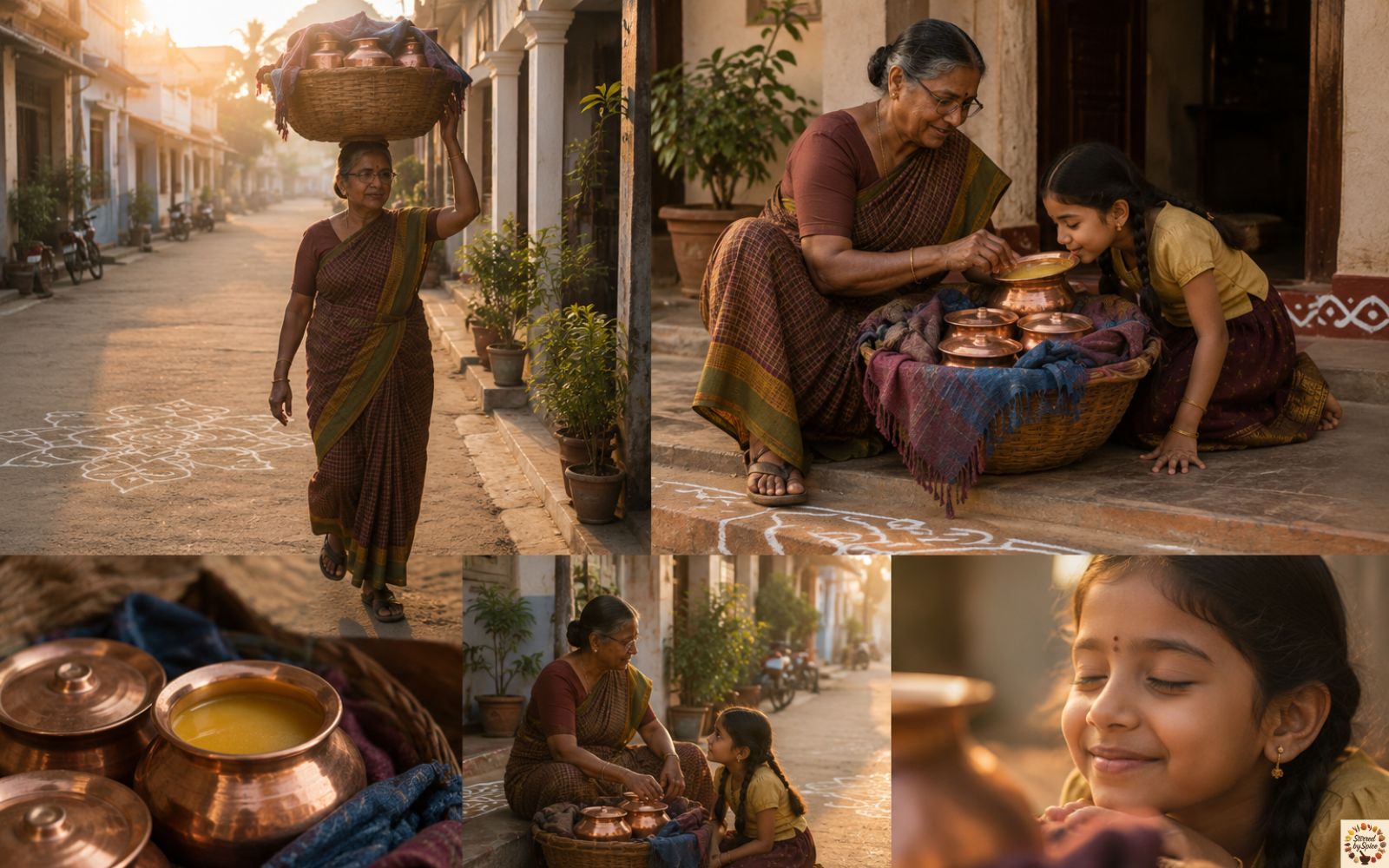

🙏 Temple & Prasadam Collection
Every sweet in this collection carries more than tradition.
It carries the quiet joy of offering simple food with gratitude,
whether to the Divine, to our families,
or to the memories
that continue to nourish us
long after the meal is over.
🪔 Part of Temple Prasadam Collection
A growing library of sacred offerings prepared for Hindu temples, festivals,
and home worship throughout the year.
🌼 Krishna Janmashtami Collection
🐘 Ganesh Chaturthi Collection
🪔 Navaratri Collection
🔥 Deepavali Collection
🌾 Pongal Collection
🌺 Varalakshmi Vratham Collection
🌿 Ugadi Collection
🌼 Explore the Krishna Janmashtami Collection.
Celebrate the birth of Krishna through South Indian naivedhyam recipes lovingly prepared
for home worship, temple offerings, and festive gatherings.
🥣 Sweet Aval / Bajjeel — Krishna's Humble Offering
🧈 Fresh Homemade Butter (Venna) — Krishna's Beloved Offering
🍚 Aval (Poha) — A Simple Naivedhyam of Sacred Simplicity
🍡 Aval Urundai — Sweet Rice Ladoo with Coconut & Jaggery
🥛 Pal Payasam — Creamy Rice Pudding for Temple Celebrations
🍮 Milk Peda / Palkova — Slow-Cooked Milk Sweet
🥣 Gulab Jamuns - Soft Milk Dumplings Soaked in Rose-Scented Syrup
🍯 Sweet Appam — Soft Jaggery Fritters for Festive Offerings
🧁 Rava Kesari (Sheera) — Fragrant Semolina Prasadam
🍩 Nei Appam — Golden Ghee-Fried Festival Sweet
🌰 Athirasam — Ancient Jaggery Rice Sweet
🍘 Seedai - Crisp Rice Flour Bites for Krishna Jayanthi
🥜 Rava Ladoo — Ghee-Roasted Festival Favorite
🥣 Uppu Seedai — Savory Rice Flour Bites
🍬 Vella Seedai — Sweet Crispy Rice Flour Balls
🥨 Murukku / Chakuli — Traditional Festival Crunch
🌾 Thenkuzhal — Light & Crisp Rice Flour Snack
🥨 Kodubale — Spiced South Indian Ring Crisps
🥤 Panagam — Cooling Jaggery Festival Drink
🥗 Kosambari — Fresh Lentil Salad Offered During Festivals
💛 Meet the Heart Behind the Spice

Hi, I'm Maya. Welcome to my kitchen.
There's warmth in every story stirred into these recipes.
A Pediatric Dentist by profession and storyteller by soul,
I bring the rhythms of South Indian cooking
into my American kitchen—
a blend of tradition, curiosity, and heart.
Whether you're here for a comforting breakfast,
a festive feast, or a family favorite, I hope these recipes
help you slow down, cook with confidence,
and create memories around your own table.
Thank you for letting me be a small part of your kitchen.
🌿 Cook with joy.
Join the Table 🌿
If this felt a little like sitting around a familiar table, you’ll feel at home here.
I share simple South Indian meals, seasonal cooking, pantry wisdom and quiet kitchen rhythms —
straight from my stove to your inbox.
I’d love to have you at the table. 🌿
No spam. Just simple recipes and quiet kitchen stories.
💬 I’d Love to Hear From You!
If this story brought back a tradition, memory, or small ritual from your own life,
I'd be honored to hear about it.
Your words, memories, and reflections mean the world to me.
Share your thoughts using the form below — I read every message.
Affiliate Disclosure:
Some links on this page are affiliate links. As an Amazon Associate,
I earn from qualifying purchases —at no extra cost to you.
I only recommend tools I personally use and trust in my own kitchen.
© 2026 Stirred By Spice | Designed with warmth 🌶️ & stories.s 🪔 All rights reserved
Some images on this site are AI-generated to reflect the spirit of home cooking.