
🥥 Semige
(Mangalorean Rice Noodles)
Soft hand-pressed rice noodles traditionally served with sweetened coconut milk,
curries, and cherished coastal memories
🌶️ Spice Level: 🌶️ Mild
⏱️ Prep Time: 20 minutes
🍲 Cook Time: 30 minutes
🍽️ Serves: 4-6
📊Calories: ~220 per serving
🥥 From the Coconut Coast
🌿 Introduction
In many Mangalorean homes, Semige is more than breakfast.
It is the rhythmic turning of the wooden press, strands of warm rice noodles gathering onto plates,
and the anticipation of sweetened coconut milk waiting nearby.
Simple in ingredients yet deeply rooted in tradition, Semige has long been a comforting meal
served during family gatherings, festive mornings, and unhurried weekends.
Whether paired with coconut milk, Kori Gassi, or a lightly spiced curry, it remains one of
the coast's most beloved rice-based dishes.
“In every strand of Semige lives a story of home, hospitality, and the coastal kitchen”
Semige
(Mangalorean Rice Noodles)
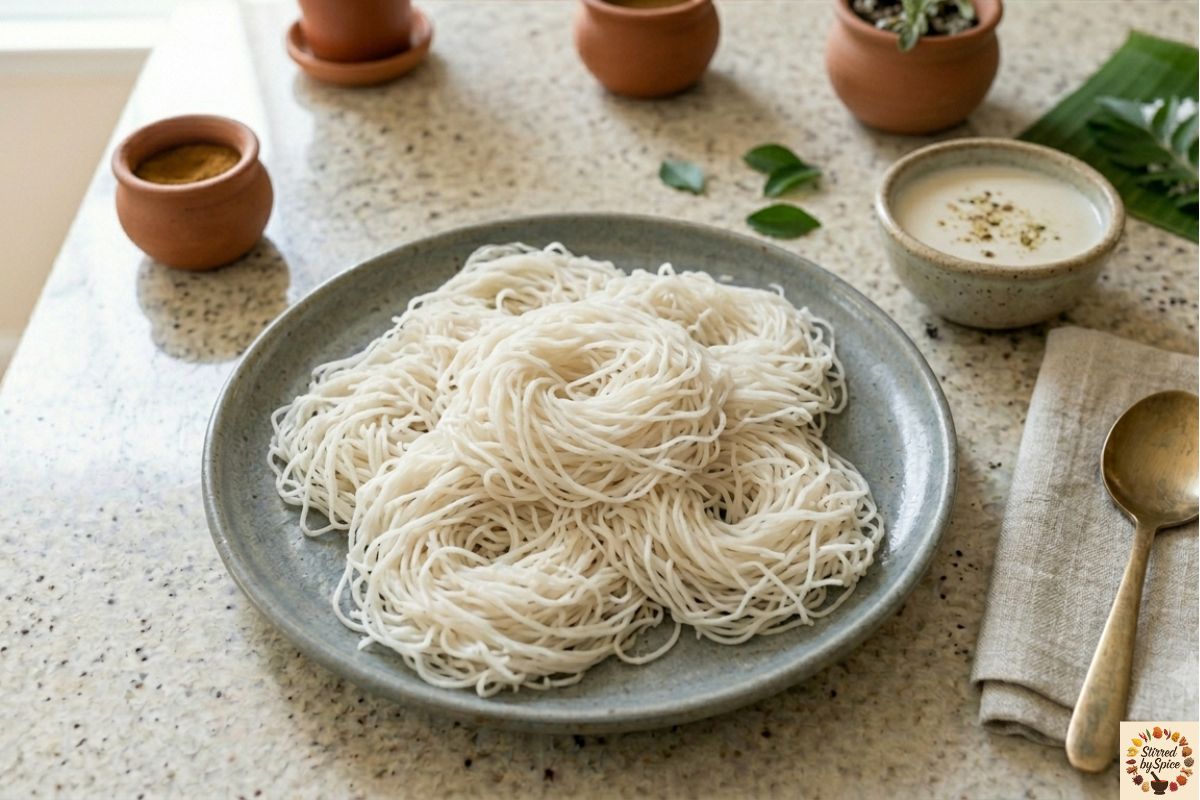
Photo by Stirred By Spice
📝 Ingredients
🥣 For the Dough
2 cups rice flour
2 cups boiling water (approx.)
½ teaspoon salt
1 teaspoon coconut oil (optional)
🍽️ Instructions
Step 1 — Prepare the Dough
Bring water to a rolling boil.
Combine rice flour and salt in a large bowl.
Gradually pour in the boiling water while mixing with a spoon.
When cool enough to handle, knead into a smooth, soft dough.
Step 2 — Prepare the Press
Lightly grease the semige press if desired.
Divide the dough into portions and place inside the press while still warm.
Step 3 —Press the Semige
Press the dough directly onto idli plates or steaming trays in circular nests.
Continue until all dough is used.
Step 4 —Steam
Steam for 8–10 minutes until the noodles are cooked and soft.
Allow them to rest for a few minutes before serving.
Step 5 — Serve
Serve warm with:
🥥 Sweetened Coconut Milk
🍗 Kori Gassi
🍤 Mangalorean Prawn Curry
🌿 Vegetable Kurma
🧡 Curious what tools I use in my everyday kitchen?
You can find my trusted cookware and appliances here → My Kitchen Resources
🍷 Optional Serving Notes
Serve alongside:
🥥 Sweetened Coconut Milk
🍗 Kori Gassi
🥣 Chicken Curry with Coconut Milk
🦐 Mangalorean Prawn Curry
🐟 Fish Curry
🌿 Vegetable Kurma
🥛 Warm Milk with Jaggery (traditional comfort-style serving)
For a traditional coastal meal, pair Semige with sweetened coconut milk or a lightly spiced coconut-based curry.
For the Curious Home Cook
Spices are more than heat or color — they’re the quiet backbone of everyday Indian cooking.
Used with care, they bring warmth, balance, and depth to even the simplest meals.
If you’ve ever wondered why certain spices are paired together, or how masalas shape flavor without overwhelming it,
I’ve gathered those foundations into a gentle, practical guide.
💬 Soulful Note
Semige is one of those dishes that quietly holds generations together.
Made from little more than rice and water, it becomes something far greater
through the hands that prepare it and the memories shared around it.
Whether served with sweetened coconut milk or a beloved family curry,
Semige remains a gentle reminder that the simplest foods are often the most enduring.
📚 Cook’s Wisdom / FAQs
👩🍳Cook's Wisdom:
Semige tastes best when the dough is pressed while still warm.
If the dough cools completely, it becomes harder to press and the noodles may break.
💡Helpful Tips
✨ Use freshly boiled water for the softest dough.
✨ Knead while warm but comfortable to handle.
✨ If the dough feels dry, add warm water one tablespoon at a time.
✨ Cover unused dough portions with a cloth to prevent drying.
✨ Steam immediately after pressing.
❓FAQ
Why is my Semige breaking while pressing?
The dough is usually too dry or too cool.
Can I use store-bought rice flour?
Yes. Fine rice flour works best.
Can I make Semige ahead?
Yes. Steam and refrigerate for up to 2 days. Reheat gently before serving.
Is Semige the same as vermicelli (semiya)?
No. Semige is freshly pressed rice noodles made from rice dough, while semiya is dried vermicelli.
📊 Nutrition (Per Serving — Approx.)
Calories 220 kcal
Protein 48 g
Carb- 4 g
Fat-1 g
Fiber: 1 g
Sodium- 120mg
🍳 Helpful Kitchen Equipment
The right kitchen tools make everyday cooking smoother and more enjoyable. These are the essentials I regularly use in my kitchen for preparing Indian meals with ease.
• Pressure Cooker / Instant Pot – Perfect for cooking rice dishes, lentils, and one-pot meals quickly while preserving flavor and texture.
• High-Speed Blender – Ideal for chutneys, spice pastes, and smooth gravies that form the base of many Indian recipes.
• Stainless Steel Kadai – A versatile pan for sautéing spices, simmering curries, and building deep layered flavors.
You can find all my everyday kitchen essentials on my Kitchen Resources page here →
If You’d Like to Go Deeper..
Many of the dishes on this page are built on quiet spice knowledge —
the kind learned slowly, through observation, repetition, and care.
If you’d like a deeper understanding of Indian spices and everyday masalas —
how to choose them, use them, and build confidence over time —
you may enjoy the guide I’ve created alongside this kitchen.
Join the Table 🌿
If this felt a little like sitting around a familiar table, you’ll feel at home here.
I share simple South Indian meals, seasonal cooking, pantry wisdom and quiet kitchen rhythms —
straight from my stove to your inbox.
I’d love to have you at the table. 🌿
No spam. Just simple recipes and quiet kitchen stories.
🍃🌶🍃 The Bottom Line
Soft, simple, and deeply comforting, Semige is one of the coast's quiet treasures—
a dish that turns rice, water, and tradition into something unforgettable.
Looking for more gentle summer meals?
Explore my June Seasonal Produce Guide
for seasonal South Indian cooking inspiration 🌿
🧡 Meet the Heart Behind the Spice

Hi, I’m Maya Shetty — cook, storyteller, and spice lover.
Through Stirred By Spice, I share recipes that warm both the kitchen and the heart — where simple ingredients and warm flavors turn everyday meals into moments of connection.
💬 I’d Love to Hear From You!
Your words, memories, and reflections mean the world to me.
Share your thoughts using the form below — I read every message.
Affiliate Disclosure:
Some links on this page are affiliate links. As an Amazon Associate,
I earn from qualifying purchases —at no extra cost to you.
I only recommend tools I personally use and trust in my own kitchen.
© 2026 Stirred By Spice | Designed with warmth 🌶️ & stories.s 🪔 All rights reserved
Some images on this site are AI-generated to reflect the spirit of home cooking.