
🥣 📕 My Kitchen Resources
🌿 Resources I Trust
Cooking, learning, and caring for ourselves doesn’t happen all at once.
It happens slowly — through small, steady choices made in everyday kitchens.
Over time, many of you have asked where to begin, what to trust, and how to move forward without feeling overwhelmed. This page brings those answers together in one gentle place.
Everything shared here reflects how I cook, learn, and live.
Nothing is rushed. Nothing is added lightly.
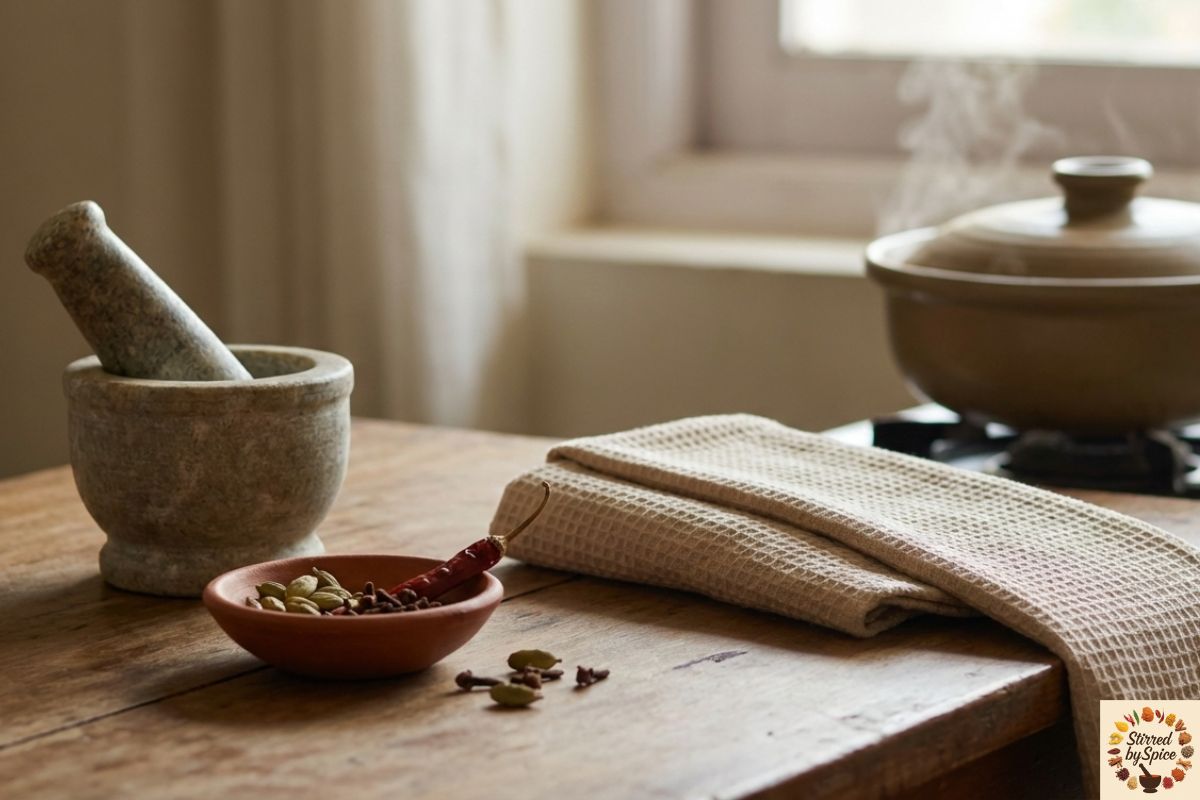
Photo by Stirred By Spice
🥘 Start Here: Learn to Cook with Confidence
If Indian spices or recipes have ever felt confusing, this is the best place to begin.
Your Complete Indian Spice & Masala Guide
A cozy, beginner-friendly guide designed to help you understand Indian spices the way they’re actually used in a real home kitchen — with clarity, intuition, and care.
Inside the guide, you’ll learn:
- What each spice actually does in a dish
- How flavors are built step by step
- When to add spices (and why timing matters)
- Common mistakes — and how to fix them gently
This guide was created to remove guesswork and replace it with calm confidence.
👉 Start here:
Link to Your Complete Indian Spice & Masala Guide
🥣 Before You Buy Anything…
Once you understand spices, the next question is often:
“What tools do I actually need to cook like this at home?”
You don’t need everything at once.
But a few dependable pieces — used consistently — make Indian cooking feel natural and calm instead of overwhelming.
👉 If you're curious what I personally use in my kitchen, you can explore my trusted tools below.
🌱 Take Your First Cozy Steps
Your First Indian Recipes – Mini Guides
Short, beginner-friendly PDFs designed to help you cook simple Indian meals with confidence — one small, cozy win at a time.
These are meant for days when you want to practice gently, without pressure or overwhelm.
👉 Explore the Mini Guides
Link to the Mini Guides page
🍲 Put Your Spices into Practice
Once spices start to feel familiar, many home cooks want to use them with ease in everyday meals.
Master Indian Flatbreads
A visual, step-by-step guide to making soft roti's, flaky parathas, and cozy home-style flatbreads —
with gentle troubleshooting and encouragement throughout.
This pairs naturally with the Spice Guide and helps bring what you’ve learned into daily cooking.
👉 Explore:
Link to Master Indian Flatbreads
📖 Explore at Your Own Pace
If you’re not ready for a guide yet, you’re always welcome to wander.
The blog is where I share:
- Quiet South Indian cooking
- Seasonal rhythms
- Cultural food stories
- Simple, soulful recipes meant for real life
There’s no pressure here — just ideas you can return to when you’re ready.
👉 Read the blog:
Link to Blog
🌿 Gentle Support Beyond the Kitchen
Food is powerful — and sometimes it helps to learn alongside others who approach
wellness thoughtfully and with care.
From time to time, I share resources from educators and creators whose work aligns
with a food-first, grounded approach to wellbeing.
Some links here may be affiliate links, which means I may earn a small commission
if you choose to explore — at no extra cost to you.
Ingredient sources will be added thoughtfully, as I test and trust delivery options that work well for Indian kitchens —
especially for those cooking away from home.
I only share resources I genuinely trust and would recommend regardless.Your support helps
sustain this space and allows me to continue sharing thoughtfully.
A gentle note before you explore
I tend to think of the kitchen in two quiet layers.
Cookware is what lives on the stove — the pans and pots that touch the food directly, carry heat, and shape flavor through daily use and familiarity.
Appliances support the work behind the scenes — tools that save time, reduce effort, or make certain traditional preparations more accessible in a modern kitchen.
Both matter, but they serve different rhythms. I’ve shared what I personally use and trust in each category, with the same intention: thoughtful cooking, done with care.
1.Cast Iron Skillet (Lodge)
A sturdy, no-nonsense pan I use for searing vegetables, shallow frying fish, and everyday cooking. It holds heat beautifully and lasts for decades with basic care.
👉 View the Lodge cast iron skillet I use
2. Stainless Steel Kadai (Triply)
A good stainless steel kadai is one of the most used pans in my kitchen — for curries, vegetable stir-fries, gravies, and everyday cooking. Triply steel takes a little practice, but it gives you control, durability, and clean flavors that really matter in Indian food.
👉 View the stainless steel kadai I recommend
3. Idli Steamer with Stand (Stainless Steel)
A reliable idli steamer is essential for South Indian cooking, and this stainless steel setup does exactly what it should — steam evenly, hold heat well, and last for years.
I like this style because it includes both the steamer pot and idli stand, making it practical for everyday use without extra attachments. Stainless steel is easy to clean, neutral in flavor, and works beautifully for soft idlis, dhokla, and other steamed dishes.
If you cook idlis regularly (or want to start), this is a simple, dependable choice that fits naturally into an Indian kitchen.
👉 View the idli steamer with stand I recommend
4.Pressure Cooker (5L – Prestige Stainless Steel)
A reliable pressure cooker is the quiet backbone of an Indian kitchen — from everyday dal and rice to sambhar, rasam stock, vegetables, and one-pot meals.
I recommend a 5-liter stainless steel pressure cooker as the most versatile option for most homes. It’s large enough for family meals, batch cooking, and guests, yet still practical for everyday use. Stainless steel is durable, non-reactive, and easy to maintain, making it a long-term kitchen companion rather than a seasonal purchase.
If you cook only for 1–2 people, a 3-liter version can also work well for smaller portions. However, the 5L offers more flexibility as your cooking needs grow — especially if you enjoy cooking ahead, hosting, or preparing traditional dishes that need space to simmer properly.
This is one of those tools that, once you own a good one, quietly supports almost every meal you make.
This is the size I recommend for most households.
👉 View the Pressure Cooker link here
5.Small Stainless Steel Tadka Pan
This is one of those tools you don’t realize you need until you use it every day. A small tadka pan is perfect for tempering mustard seeds, cumin, curry leaves, dried chilies, and ghee — especially for rasam, dal, chutneys, and finishing touches.
Stainless steel gives you control and precision without coating concerns, and the long handle keeps things safe when oil is hot. Simple, purposeful, and used far more often than expected.
👉 This is the size and style I use for everyday tadka.
6.High-Power Blender (Vitamix)
A powerful blender is essential for Indian cooking — from coconut chutneys and spice pastes to smoothies and batters. Vitamix blenders are known for their strength, consistency, and longevity, making them a solid investment if you cook often.
If you’re used to Indian mixie grinders, this is the closest US-friendly equivalent in terms of power and reliability.
👉 This is the blender I recommend for serious home cooking.
7.Paniyaram / Appe Pan
A paniyaram pan is incredibly versatile beyond just paniyaram. I use it for kuzhi paniyaram, unniyappam, savory lentil snacks, and even small fritters or eggless bites.
This style allows even cooking with minimal oil and is especially useful when you want crisp edges and soft centers. A glass lid is a bonus for controlled cooking without constant checking.
👉 View the paniyaram pan I recommend
8. Cast Iron Dosa / Griddle Pan
If you make dosa regularly, a cast iron griddle is worth the learning curve. Once seasoned, it creates beautifully crisp dosas with depth of flavor that nonstick pans simply can’t match.
This pan holds heat evenly, works on all stovetops, and improves with use. It’s a slow-build relationship — but one that rewards patience with consistent, restaurant-style results at home.
👉 View the cast iron griddle I use
9.Wet Grinder (110V – Indian Cooking Essential)
If dosa, idli, and vada are a regular part of your kitchen rhythm, a wet grinder makes a noticeable difference. It grinds slowly and gently, preserving texture and fermentation quality in a way blenders can’t fully replicate.
This is especially useful if you cook South Indian food often or in larger batches. Look for a 110V model designed for U.S. kitchens to avoid voltage issues.
👉 View the wet grinder I recommend
10.Cast Iron Kadai / Mini Wok (Lodge)
This cast iron kadai is one of my most-used pans for high-heat cooking. I use it regularly for making pooris, frying papadams, shallow- and deep-frying fish, and anything that needs steady heat without temperature drops.
Cast iron holds heat exceptionally well, which means oil stays hot and consistent — resulting in better puffed pooris, crisp papadams, and evenly fried food without excess oil absorption. The rounded shape is especially useful for frying in smaller oil quantities, making it efficient and practical for everyday Indian cooking.
It’s sturdy, naturally non-toxic, and built to last for decades with simple care. Once seasoned and familiar, this pan becomes one of those quiet kitchen workhorses you reach for instinctively.
Ideal for: pooris, papadams, pakoras, fish fry, and small-batch deep frying.
👉 View the cast iron kadai/mini-wok I recommend
11.Traditional Roti Roller & Wooden Board (Belan + Chakla)
If you make rotis regularly, a dedicated wooden roller and board make the process smoother and more intuitive. The slight weight of the roller helps create even pressure, while the flat wooden board keeps the dough stable as you roll.
There’s something grounding about using traditional tools for everyday bread. It turns roti-making into a rhythm rather than a task.
I prefer a solid wood set that feels sturdy in the hand and doesn’t wobble on the counter. Simple. Functional. Built to last.
Ideal for: rotis, chapatis, pooris, parathas, and even rolling pastry dough.
👉 View the roti roller & board I recommend
12. Whisk – Ideal for smoothing yogurt, blending spice mixes, and creating lump-free gravies and batters that come together effortlessly in everyday Indian cooking.
13.Vegetable Peeler -A sharp vegetable peeler makes prepping raw mango quick and effortless, helping you work with
firm skins easily and safely.
14.Rice Container -Storing rice in an airtight rice container keeps it fresh, organized, and ready for quick meals —
making everyday cooking smoother and more efficient.
15.Glass Food Storage Jars- These Glass canisters with wooden lids, the ample amount meets your kitchen storage and organization needs easily, keeping your food fresh and your pantry well organized
(This section will grow slowly and intentionally.)
👉 [Future trusted resource link]
👉 [Future trusted resource link]
🤍 The Bottom Line
This page isn’t meant to rush you into buying anything.
Think of it as a quiet reference —
a place you can return to when a pan finally wears out,
when you’re setting up a new kitchen,
or when a recipe makes you pause and wonder,
What do they use for this at home?
Bookmark it. Come back when it’s useful.
That’s more than enough.
💌 Questions?
Just send me a message anytime — I’m right here in the kitchen with you.
❤️ A Note from My Kitchen
I believe food should feel grounding, not stressful.
Learning should feel supportive, not overwhelming.
If something here helps you feel more confident or at ease, I’m glad you found your way here.
And if you ever have questions, you can always reach out —
I’m right here in the kitchen with you.
~ Maya
Stirred by Spice 🌶️
🌶️ Stirred By Spice — Built with warmth, flavor, and stories.
Affiliate Disclosure:
Some links on this page are affiliate links. As an Amazon Associate,
I earn from qualifying purchases —at no extra cost to you.
I only recommend tools I personally use and trust in my own kitchen.
© 2026 Stirred By Spice | Designed with warmth 🌶️ & stories.s 🪔 All rights reserved
Some images on this site are AI-generated to reflect the spirit of home cooking.