
🐦⬛ Why Do We Remember Our Ancestors
During Pitru Paksha?
On food, water, memory, gratitude, and the people whose lives made ours possible
❤️ Stories of Devotion
Why Do We Remember Our Ancestors
During Pitru Paksha?
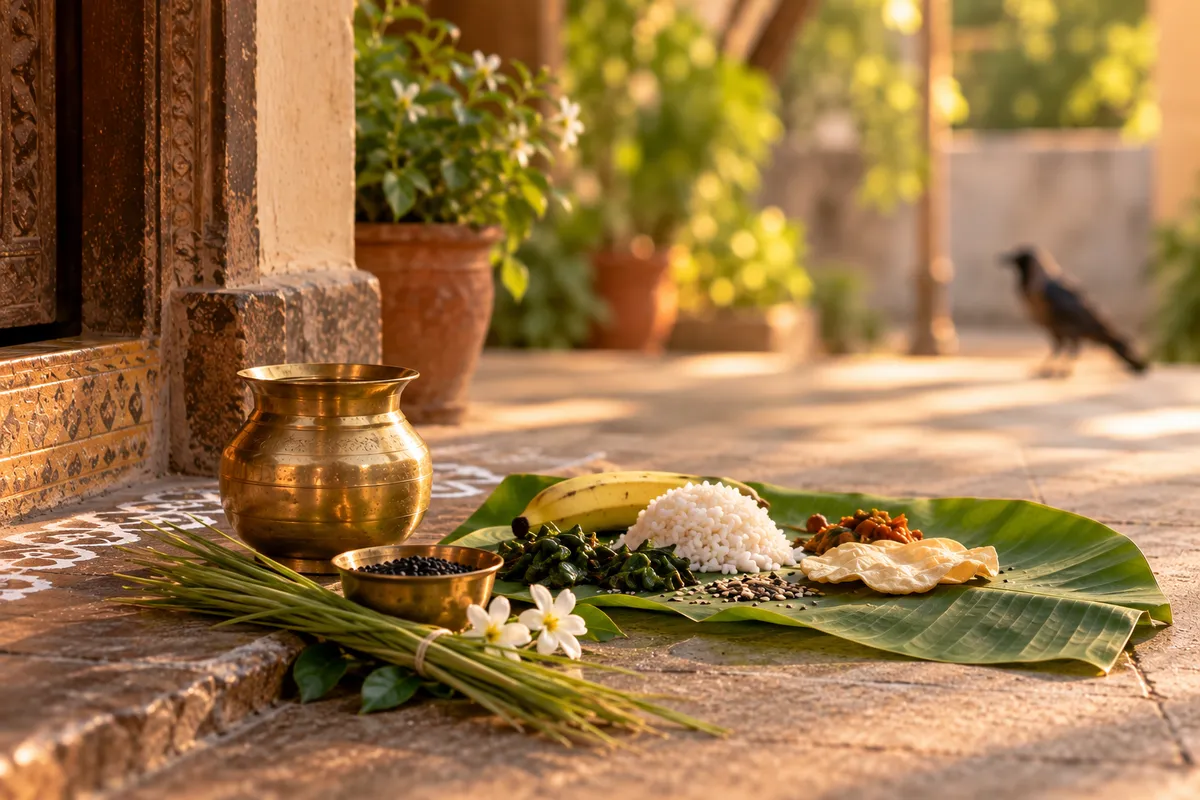
Photo by Stirred By Spice
Sometimes tradition reaches us first as a gesture.
Understanding comes later.
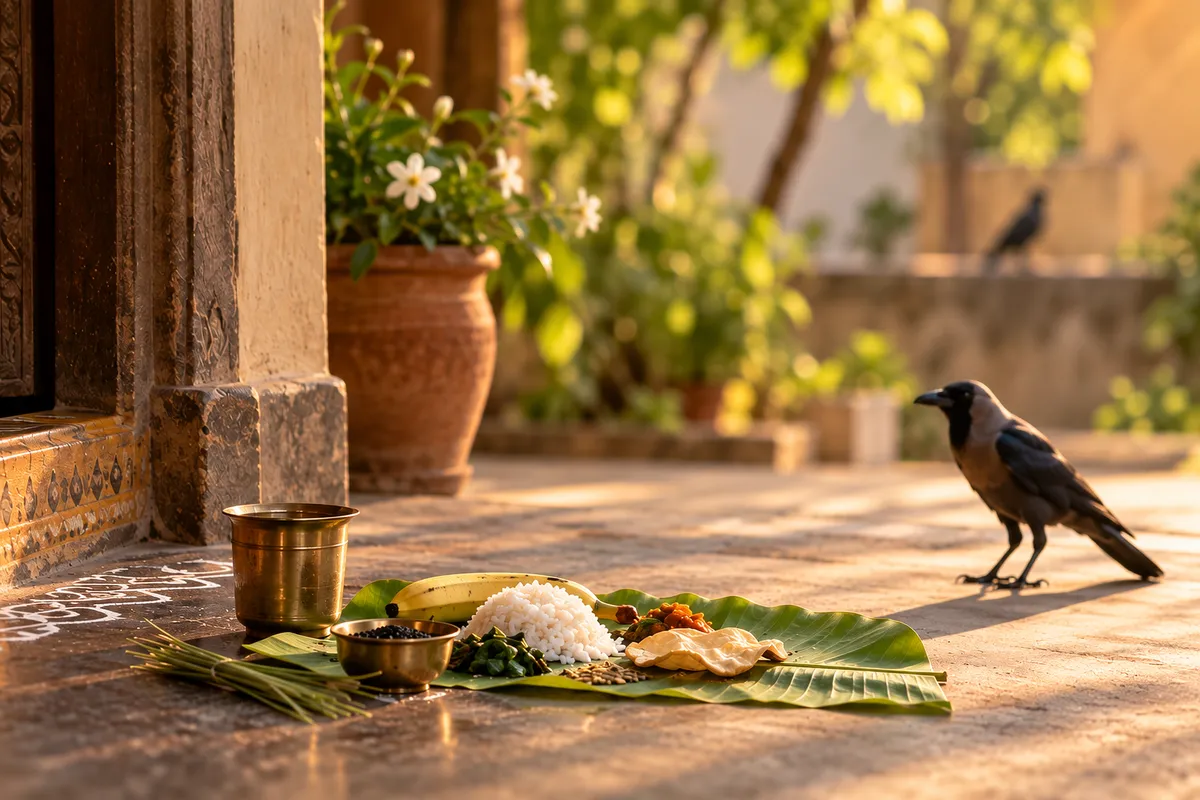
Growing up in Tamil Nadu, I remember neighbors placing food outside and calling to the crows.
“Kaa… Kaa… Kaa…”
There would be a little anticipation as everyone waited.
Then one crow would arrive, and somehow that first arrival felt important.
Soon there might be others.
I saw the gesture long before I understood the belief beneath it.
In my own Mangalorean Bunt family, ancestral remembrance looked different.
After my grandmother died, I remember the rituals that followed her death.
Food was prepared, banana leaves were laid, and a meal was first placed separately
for the departed before the gathered family ate.
I remember the ritual.
I remember the food.
I remember the people.
But I did not understand the larger tradition into which those gestures belonged.
Years later, I found myself asking a question I had somehow never thought to ask:
Why do we feed those who are no longer physically here?
That question led me to śrāddha, to Pitru Paksha, to water poured from the hands,
sesame seeds, rice, darbha grass, lunar days, crows,
food offered and food shared.
And perhaps most of all, it led me back to something I had been carrying
without knowing its name.
Remembrance made visible.
This is how Shraddha has begun to make sense to me:
Ritual gives remembrance a body.
“Sometimes tradition reaches us first as a gesture.
Understanding comes later.”
What Is Shraddha?
The Sanskrit words deserve a little care here.
Śraddhā carries meanings associated with faith, trust and reverence.
Śrāddha came to designate rites performed for departed ancestors.
So Shraddha is not simply “remembering the dead.”
It belongs to an old and complex Hindu ritual tradition in which
the living maintain obligations toward the Pitṛs — the ancestors —
through offerings, remembrance and prescribed rites.
Texts discussing ancestral offerings go back many centuries.
The Mahabharata, Dharma literature and later ritual texts describe offerings that include
water, sesame, rice, barley and other foods.
Some describe piṇḍas — portions or balls of prepared food — placed for the ancestors,
water mixed with sesame, kuśa or darbha grass, and
the invocation svadhā in connection with offerings to the Pitṛs.
The exact ritual form has never been identical in every Hindu community.
Regional tradition, family custom, lineage and historical period all matter.
There is a difference between asking:
What do particular texts prescribe for the Pitṛs?
and asking:
What would the people we loved recognize as home?
Both questions can exist within a living tradition without being forced
into the same answer.
Who Are the Pitṛs?
We often translate Pitṛs simply as “ancestors,” although the ritual idea
is more layered than our everyday use of the word.
Shraddha traditions remember preceding generations through ancestral lineages,
including both paternal and maternal ancestry.
That matters to me.
My doorway into this subject is not an abstract family tree.
It begins with people I loved and others I know only through the stories handed down to me.
I knew both my grandmothers — my Doddas.
I never knew my grandfathers. They died before I was born.
And yet all four belong to the story that eventually became mine.
Perhaps that is one of the first things ancestral remembrance asks us to reconsider.
Inheritance is not only:
What did they leave me?
There is another question:
What reached me through them?
A temperament.
A language.
A recipe.
A prayer.
A gesture.
A way of welcoming people into a home.
Resilience.
Stories repeated until people we never met somehow become familiar.
Ways of loving.
Ways of surviving.
Sometimes wounds, too.
And sometimes strengths whose beginnings lie generations before us.
We stand inside histories we did not personally witness.
🌙 Why Is There a Pitru Paksha?
Paksha means a lunar fortnight.
Pitru Paksha is the waning half of the lunar month
traditionally set aside for ancestral rites.
In South Indian amānta calendars, it falls during Bhadrapada Krishna Paksha.
Other Hindu calendar systems may name the corresponding lunar month differently,
while the ritual period itself remains tied to the same lunar cycle.
This is one of those moments when the Hindu calendar reveals itself as something
much more than a collection of festival dates.
The moon organizes ritual time.
An ancestor's annual Shraddha is traditionally connected to the tithi — the lunar day —
associated with the death, rather than simply the Gregorian date printed on a modern calendar.
That is why these observances appear to “move” from year to year when we look at them
through January, February and March.
The ritual date has not wandered aimlessly.
We changed the calendar through which we were looking at it.
Pitru Paksha culminates in Sarva Pitru Amavasya, also called Mahalaya Amavasya,
the new-moon day associated with collective ancestral remembrance.
This day also carries particular significance when an ancestor's precise death tithi
is unknown or an individual tithi observance could not be performed.
I found that unexpectedly comforting.
Because I don't know the tithis of all my ancestors either.
Perhaps many of us don't.
Names disappear.
Dates disappear.
Migration interrupts customs.
Families move.
People die before anyone thinks to ask the questions we later wish we had asked.
A ritual tradition that makes room for forgotten dates
acknowledges something deeply human:
inheritance sometimes arrives incomplete.
Why Do We Offer Water?
Water appears again and again in ancestral rites.
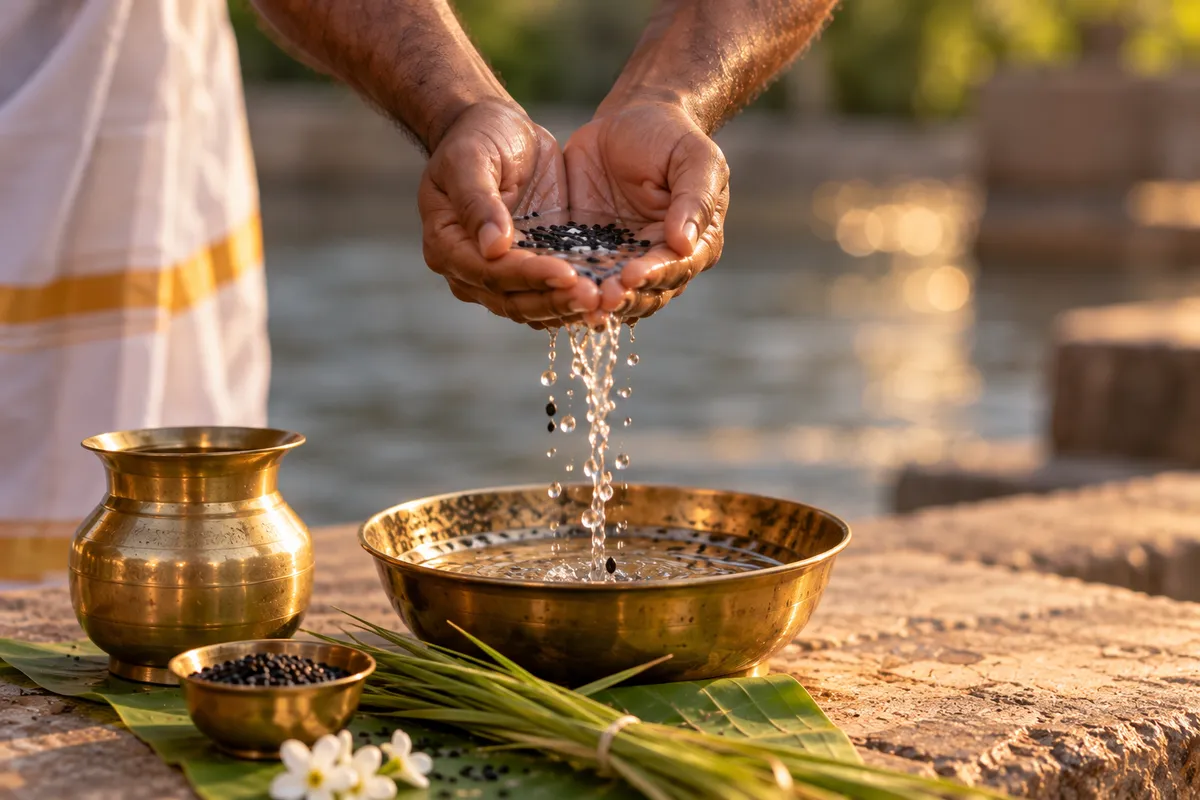
Tarpana involves ritual offerings of water, often together with sesame,
accompanied by prescribed invocations.
Ancient Dharma literature and later ritual traditions repeatedly place water
among offerings to the ancestors.
There are many symbolic explanations for why water is used, and
traditions have accumulated different layers of interpretation over time.
But perhaps we don't need to rush past the physical gesture.
Water is one of life's simplest necessities.
To pour water for someone is to perform one of the oldest acts of care imaginable.
The hand remembers someone.
The water moves.
Remembrance becomes action.
Why Sesame?
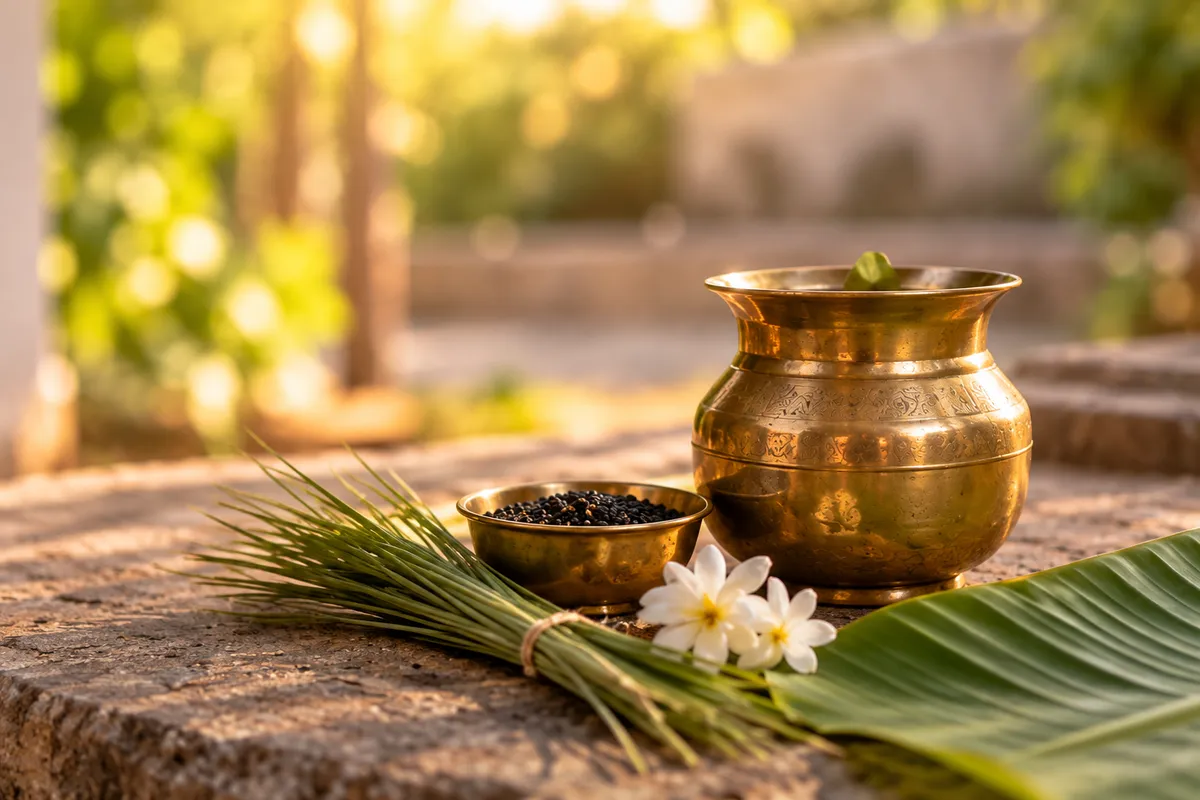
Sesame — ellu/tila — appears repeatedly in textual descriptions
of ancestral offerings.
The Mahabharata and Dharma literature include sesame among foods and substances
considered appropriate in Shraddha, and later ritual practice
frequently combines sesame with the water used in tarpana.
The continued presence of sesame across these traditions tells us something
even before we attempt to explain every layer of symbolism surrounding it:
Our texts remember sesame being offered for a very long time.
Sometimes tradition preserves a gesture across generations even
while the explanations surrounding it continue to grow.
Why Do We Offer Piṇḍa?
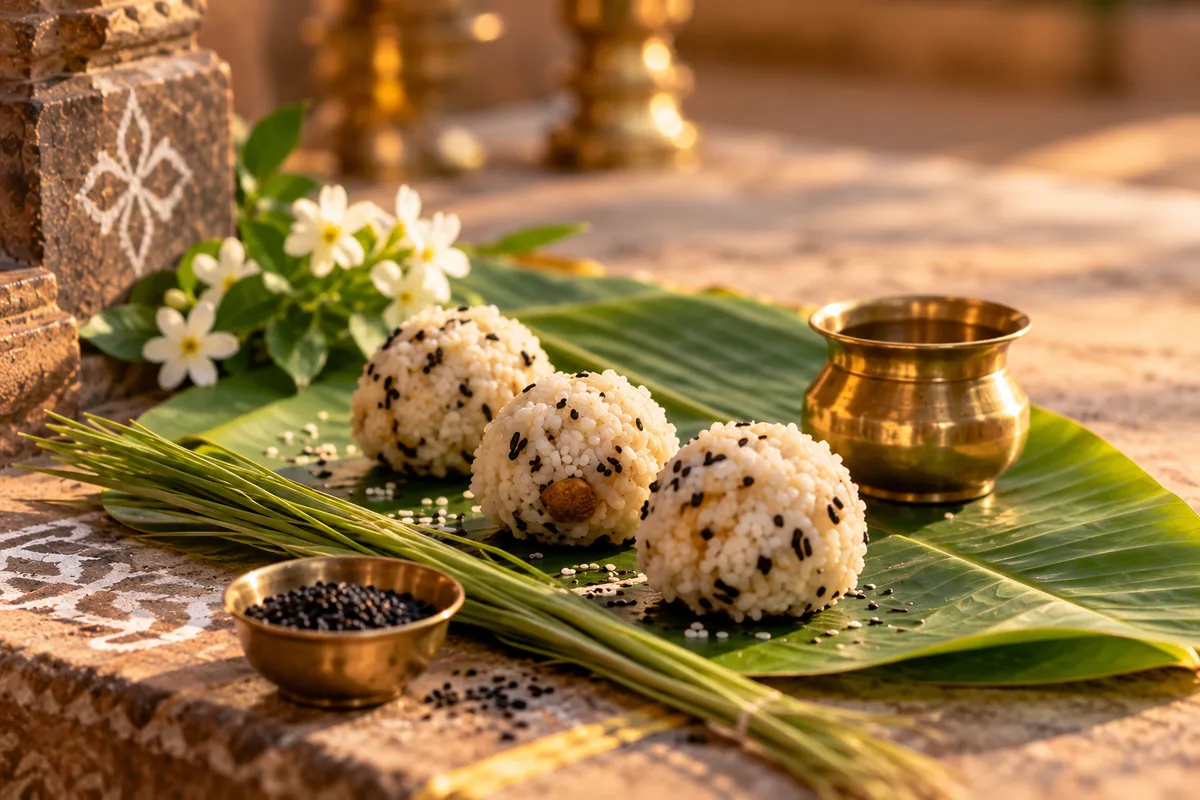
One of the most recognizable Shraddha offerings is the piṇḍa —
commonly a rounded portion of prepared food,
often rice-based, offered in ancestral rites.
The details vary by ritual tradition, but the underlying act is striking.
The departed are remembered through food.
That caught my attention immediately.
Because food has always been one of the ways my own culture knows how to say:
You belong here.
We feed people when they arrive.
We feed them when they celebrate.
We feed them when they grieve.
We feed them before they leave.
And in ancestral ritual, remarkably, food can continue speaking even after death.
Perhaps that is why the question that stayed with me wasn't merely:
What food does Shraddha prescribe?
It was:
Why do we offer the departed foods they loved?
Those are different questions.
One asks:
What does the śāstra prescribe for the Pitṛs?
The other asks:
What would Dodda recognize as home?
I don't want to collapse one into the other.
My family's practices belong to a particular community and household tradition.
They cannot stand in for every Hindu family.
But they taught me something before I knew I was learning it:
Food is one of the languages through which relationship continues.
And Why the Crow?
For many South Indians, one of the most familiar images connected with
ancestral remembrance may be the crow.
Growing up in Tamil Nadu, I remember neighbors placing food outside and calling:
“Kaa… Kaa… Kaa…”
Then came the waiting.
There was always a little excitement when the first crow arrived —
and often it would soon call the others.
Only much later did I begin wondering why.
Feeding crows appears in several Hindu household and ritual contexts,
including practices connected with ancestral tithis, Amavasya and Shraddha.
Other crow-feeding customs may be associated with Saturdays and Shani.
The practices can vary by family and region, even when the gestures look similar.
What I inherited first was not the explanation.
It was the image:
food offered, a crow called, a family waiting.
Sometimes tradition reaches us first as a gesture.
Understanding comes later.
Why Kuśa? Why South? Why Svadhā?
As I began reading about Shraddha, certain details appeared again and again.
Kuśa or darbha grass.
A ritual orientation toward the south.
The word svadhā.
These belong to an old ritual vocabulary surrounding offerings to the Pitṛs.
The south has long been associated in Hindu ritual tradition with Yama and the ancestors.
Darbha has an ancient place in ritual practice, and
svadhā is closely associated with offerings made to the Pitṛs.
Together they reveal something easy to miss when we describe Shraddha
simply as “remembering our ancestors”:
Ancestral remembrance has a grammar.
Time matters.
Direction matters.
Food matters.
Water matters.
Words matter.
The body participates.
Shraddha allows remembrance to move beyond thought and become ritual action.
Ritual gives remembrance a body.
What About Our Maternal Ancestors?
When we speak about ancestry, English itself sometimes quietly pushes us
toward words such as forefathers and paternal lineage.
But ancestry is larger than that.
Hindu ancestral traditions contain remembrance of both paternal and maternal lines,
although the precise structure and performance of formal Shraddha rites can differ
according to text, lineage, community and family tradition.
For me, that matters for a very simple reason:
My grandmothers are not footnotes to my ancestry.
They are among the clearest ways I know that ancestry exists.
So when I think about those who came before me, I do not imagine ancestry as a line
populated only by men whose names appear on a family tree.
I think of the women too.
The mothers and grandmothers.
The homes they held together.
The food they made.
The stories they carried.
The things they endured.
The tenderness they passed forward.
Some inheritances arrive through property and names.
Others arrive so quietly that we recognize them only when we
discover ourselves carrying them.
What Do We Owe to Those Who Came Before Us?
The more I learned about Shraddha, the less it felt like a ritual
concerned only with death.
It began to feel like a ritual concerned with relationship.
Our ancestors existed before us, but their lives did not remain
entirely behind them.
Something travelled forward.
Perhaps that is why the question at the heart of ancestral remembrance is not:
What can my ancestors give me?
But something quieter:
What reached me through them — and how do I remember it with gratitude?
Their lives mattered.
Their choices travelled forward.
Their struggles and sacrifices became part of circumstances they could never have known
would eventually include us.
We may remember some of them intimately.
Others survive only as names.
Some names may have disappeared altogether.
And yet our own existence tells us something very simple:
there were lives before ours.
Shraddha gives us a way to turn toward them.
Not necessarily because we expect something in return.
But because gratitude itself is a form of relationship.
What If I Don't Know the Rituals?
Perhaps this is the part I needed most.
Because I am learning too.
I don't know every ancestor's tithi.
I did not inherit detailed instructions for performing Shraddha.
Some practices reached me only as childhood images.
Others didn't reach me at all.
And I suspect I am not alone.
Many people inherit religion this way.
A little Sanskrit.
A grandmother's habit.
A festival dish.
A lamp lit every Friday.
A prohibition nobody explained.
A mantra remembered imperfectly.
The smell of camphor.
A temple visited every summer.
Food placed outside for a crow.
Fragments.
For someone wishing to undertake formal Shraddha rites, family tradition,
regional custom and appropriate ritual guidance matter.
But perhaps the absence of complete ritual knowledge does not require
the absence of remembrance.
You can learn.
You can ask.
You can begin recovering the names and stories.
And when even dates have been lost, Hindu tradition preserves
a collective day of remembrance in Sarva Pitru Amavasya.
There is something tender about that.
A day that seems to say:
Bring the ones whose dates you know.
Bring the ones whose dates you forgot.
Bring the ones whose names survived.
Bring the ones whose names disappeared somewhere along the way.
There is still room at the table.
What Are We Really Offering?
This is the question I keep returning to.
What exactly are we offering when we remember an ancestor?
Water?
Yes.
Sesame?
Yes.
Rice?
Yes.
Food?
Yes.
But perhaps, underneath all of those gestures, we are offering something else.
Continuity.
Because ancestral remembrance is not only about those who died.
It is also an exploration of what the living do with love after someone is gone.
The ritual does not ask us to imprison those we loved inside the moment of their death.
It makes space for their continuing place within a family story.
We are saying:
You lived.
Your life reached mine.
Something of you travelled forward.
I have not mistaken death for erasure.
Perhaps that is why ritual matters.
Memory can remain entirely inside us.
Ritual asks the body to participate.
I pour this water.
I place this food.
I speak your name.
I stop on this particular day and make room for you among the living.
Ritual gives remembrance a body.
For the Ancestors We Knew — and Those We Didn't
Some ancestors live in our own memories.
We remember their voices.
Their homes.
Their hands.
The things they cooked.
The expressions they used.
The particular ways they loved us.
Others left before we arrived.
We know them only through photographs, names and stories
carried by someone else.
And further back are people whose names we may never know at all.
Perhaps ancestry asks us to understand that personal memory
is not the boundary of relationship.
Someone does not have to have held us for their life to have
helped make ours possible.
And someone we loved does not disappear from the family story merely because
future generations will never meet them.
That is perhaps one of the gifts we can pass forward.
Names.
Stories.
Recipes.
Photographs.
Character.
Memory.
The knowledge that before us there were people who struggled, loved,
failed, endured, fed families, buried people they loved,
celebrated births, crossed distances, built homes
and somehow kept life moving forward.
Death ended their lives.
It did not erase their place in ours.
A Quiet Namaskara
I began this exploration because I realized how much I did not know.
I am ending it with more questions than I started with.
And strangely, I am grateful for that.
Because Why Do We? was never meant to be an expert standing at the front of a room
explaining Hinduism to everyone else.
It is curiosity walking beside the reader.
I inherited pieces of something enormous.
Some I understood.
Some I practiced without understanding.
Some I watched other families practice.
Some never reached me at all.
Now I am curious enough to ask why.
Perhaps you inherited fragments too.
You don't need to have inherited the whole explanation.
Bring the fragment you have.
A story.
A ritual.
A dish.
A word.
A lamp.
A banana leaf.
A crow on the wall.
A grandmother's instruction whose meaning you never thought to question.
We can begin there.
We take the fragments we inherited and go looking for the story around them.
And perhaps this Pitru Paksha, my own remembrance can begin with something very simple:
If there is an ancestral obligation I can honor, let me honor it.
If there is gratitude I can express, let me express it.
If there is a blessing that can travel forward, let it travel.
And if nothing else, let the people who gave me this life be remembered.
A quiet namaskara to those who came before us.
🙏❤️
❤️ A Few More Stories to Savor
💛 Meet the Heart Behind the Spice
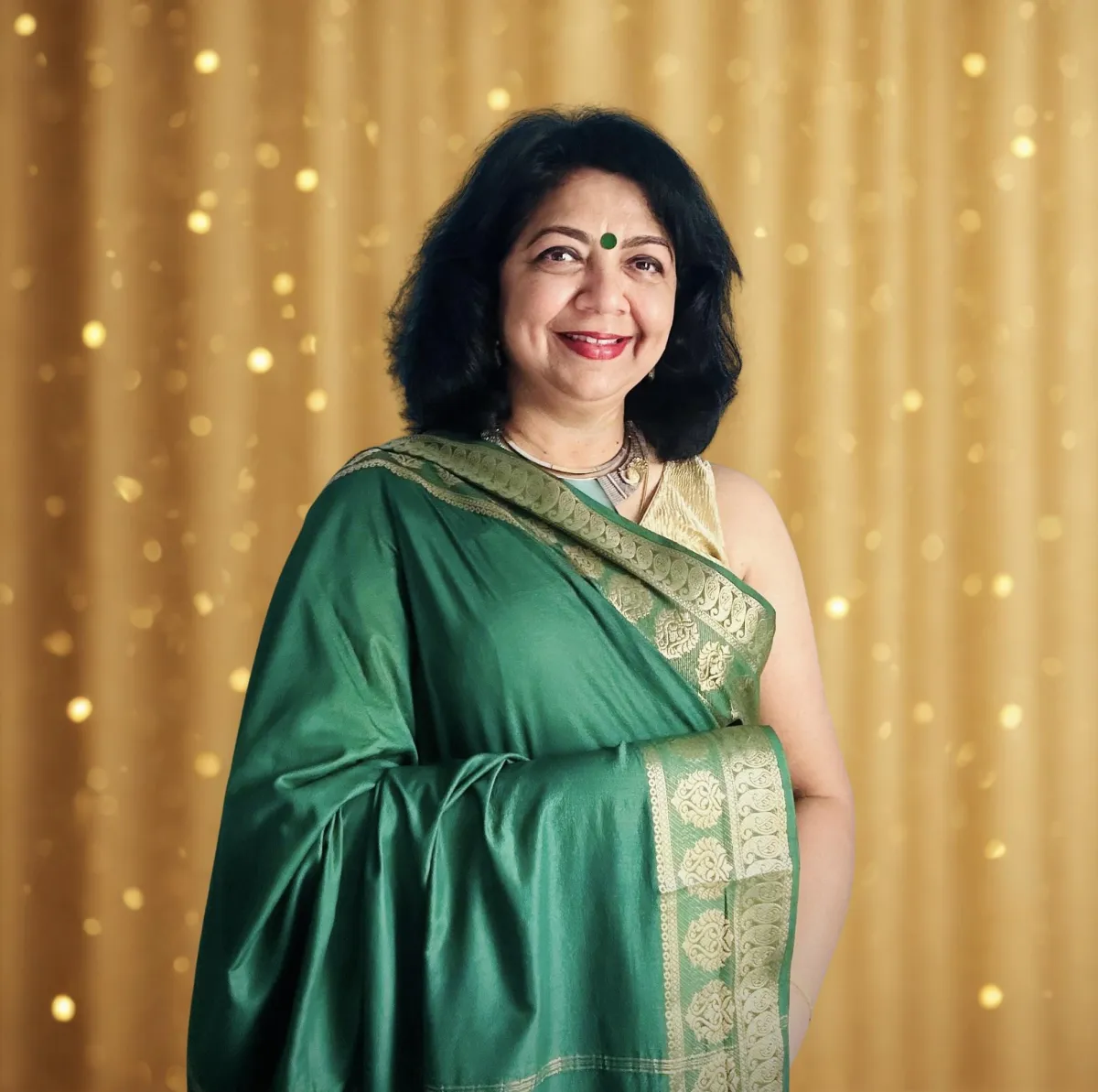
Hi, I'm Maya. Welcome to my kitchen.
There's warmth in every story stirred into these recipes.
A Pediatric Dentist by profession and storyteller by soul,
I bring the rhythms of South Indian cooking
into my American kitchen—
a blend of tradition, curiosity, and heart.
Whether you're here for a comforting breakfast,
a festive feast, or a family favorite, I hope these recipes
help you slow down, cook with confidence,
and create memories around your own table.
Thank you for letting me be a small part of your kitchen.
🌿 Cook with joy.
Join the Table 🌿
If this felt a little like sitting around a familiar table, you’ll feel at home here.
I share simple South Indian meals, seasonal cooking, pantry wisdom and quiet kitchen rhythms —
straight from my stove to your inbox.
I’d love to have you at the table. 🌿
No spam. Just simple recipes and quiet kitchen stories.
💬 I’d Love to Hear From You!
If this memory reminded you of someone you love, I'd be honored to hear their story too.
Your words, memories, and reflections mean the world to me.
Share your thoughts using the form below — I read every message.
Affiliate Disclosure:
Some links on this page are affiliate links. As an Amazon Associate,
I earn from qualifying purchases —at no extra cost to you.
I only recommend tools I personally use and trust in my own kitchen.
© 2026 Stirred By Spice | Designed with warmth 🌶️ & stories.s 🪔 All rights reserved
Some images on this site are AI-generated to reflect the spirit of home cooking.