
🫙The Indian Pantry, Simplified:
The Only Spices You Actually Need to Begin
You don’t need a hundred spices — just a place to begin.
🌶️ The Spice Within
The Indian Pantry, Simplified.
Introduction
If Indian cooking has ever felt intimidating, it’s usually not because of the cooking — it’s because of the pantry.
Rows of unfamiliar spice names.
Long ingredient lists.
Recipes that assume you already know what everything is.
Let me say this gently:
You do not need a full Indian pantry to start cooking Indian food.
You need a small beginning. That’s all.
Indian cooking isn’t about owning everything.
It’s about learning how a few things work — and letting confidence grow from there.
Why the Indian Pantry Feels Overwhelming
Most beginners feel stuck before they even turn on the stove.
Why?
- Online lists show 20+ spices at once
- “Authentic” gets mistaken for “complicated”
- No one explains what’s essential vs optional
What you’re really seeing isn’t reality — it’s accumulation over time.
Every Indian kitchen you admire didn’t start full.
It grew, slowly, dish by dish.
What Indian Home Pantries Actually Look Like
In real homes, pantries are simple.
- A few everyday spices.
- A few trusted flavors.
- A lot of repetition.
We cook the same dishes often — not because we lack variety, but because familiarity builds intuition.
That intuition is what makes Indian cooking feel effortless later.
And it starts with less, not more.
The Only Spices You Actually Need to Begin
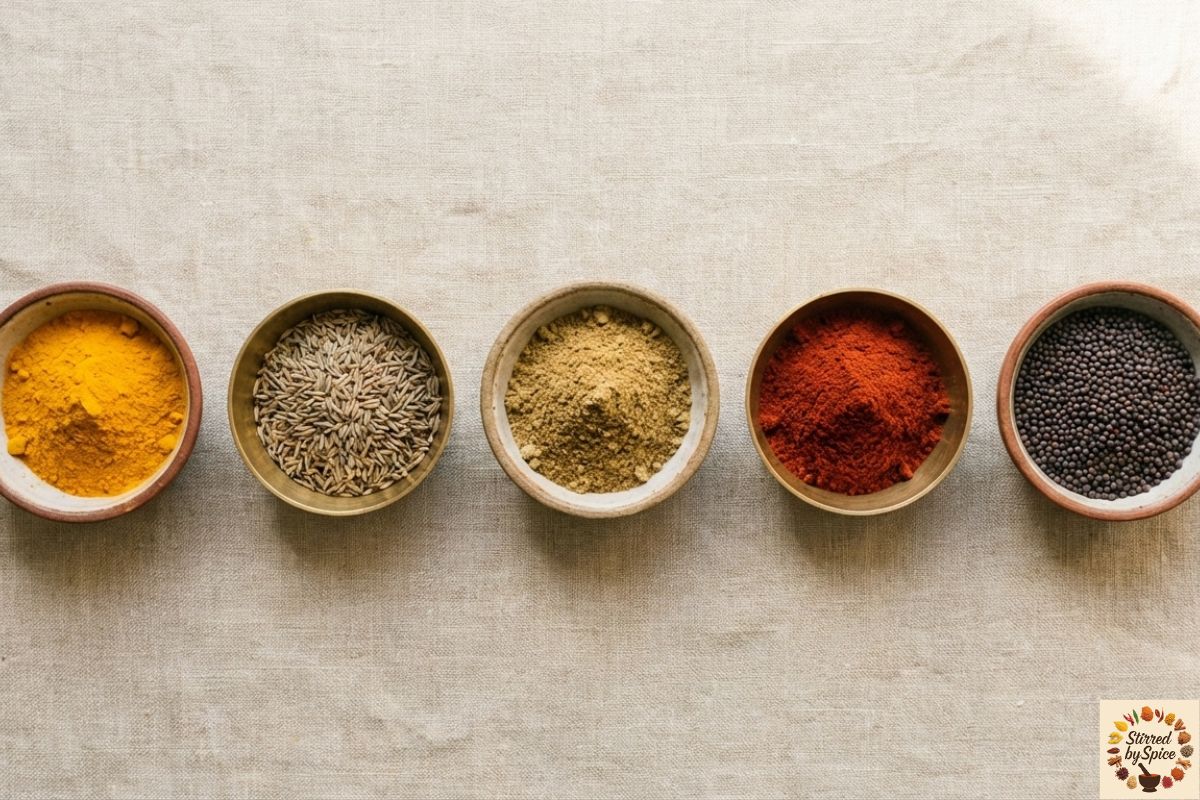
If you’re starting from zero, begin with these five:
- Turmeric – warmth, color, comfort
- Cumin seeds – earthiness and depth
- Mustard seeds – quiet heat and aroma
- Red chili powder – adjustable heat
- Coriander powder – balance and body
That’s it.
With just these, you can cook dal, vegetables, rice dishes, and simple one-pot meals.
Everything else can wait.
New to Indian cooking?
You don’t need everything at once.
If you’d like help understanding the spices behind this pantry, my FREE Indian Spice Guide walks you through it gently.
How to Think About Spices (Instead of Memorizing Them)
Spices aren’t rules.
They’re relationships.
You learn them by:
- smelling them as they bloom
- tasting as you go
- cooking the same dish more than once
Indian cooking isn’t about precision — it’s about paying attention.
Trust builds one meal at a time.
What You Don’t Need Right Now
You don’t need:
- a hundred jars
- specialty equipment
- regional mastery
- “authentic” approval
You don’t need to cook like someone else’s grandmother.
You need to cook like you, learning gently.
Bottom Line
If you’d like a calm place to begin, I’ve created a small, beginner-friendly guide designed exactly for this stage — simple recipes, familiar ingredients, and no overwhelm.
But whether you start with a guide or a single spice jar, remember this:
Indian cooking is learned — not inherited.
And you’re already on your way.
🧡 Meet the Heart Behind the Spice

Hi, I’m Maya Shetty — cook, storyteller, and spice lover.
Through Stirred By Spice, I share recipes that warm both the kitchen and the heart — where simple ingredients and warm flavors turn everyday meals into moments of connection.
💬 I’d Love to Hear From You!
Your words, memories, and reflections mean the world to me.
Share your thoughts using the form below — I read every message.
© 2025 Stirred By Spice | Designed with warmth 🌶️ & storiess 🪔. All rights reserved