
🌾 Pongal: A Festival of Gratitude, Harvest, and Everyday Abundance
Pongal is not tiffin — it is threshold food.
It marks time, season, and collective gratitude, not daily routine.
🌾 Festival Context
Region: Tamil Nadu & South India
Season: Mid-January (Harvest)
Theme: Gratitude • Abundance • Renewal
In 2026, Pongal is celebrated from January 14-17th.
🍯 Sweet Offerings & Festive Flames
🌿 Introduction
In South Indian homes, January doesn’t arrive quietly.
It comes with the sound of milk bubbling over, the scent of freshly cooked rice and lentils,
and the quiet rhythm of kitchens waking up before sunrise.
Pongal is not a festival of extravagance or spectacle.
It is a festival of gratitude — for the sun, the soil, and the food that sustains us.
For those who grew up celebrating it, Pongal is deeply familiar.
For those discovering it for the first time, it offers a gentle window into
how food, season, and culture are woven together in South Indian life.
“Pongal is a reminder that food is not just eaten — it is received.”
Pongal: A Festival of Gratitude, Harvest, and Everyday Abundance
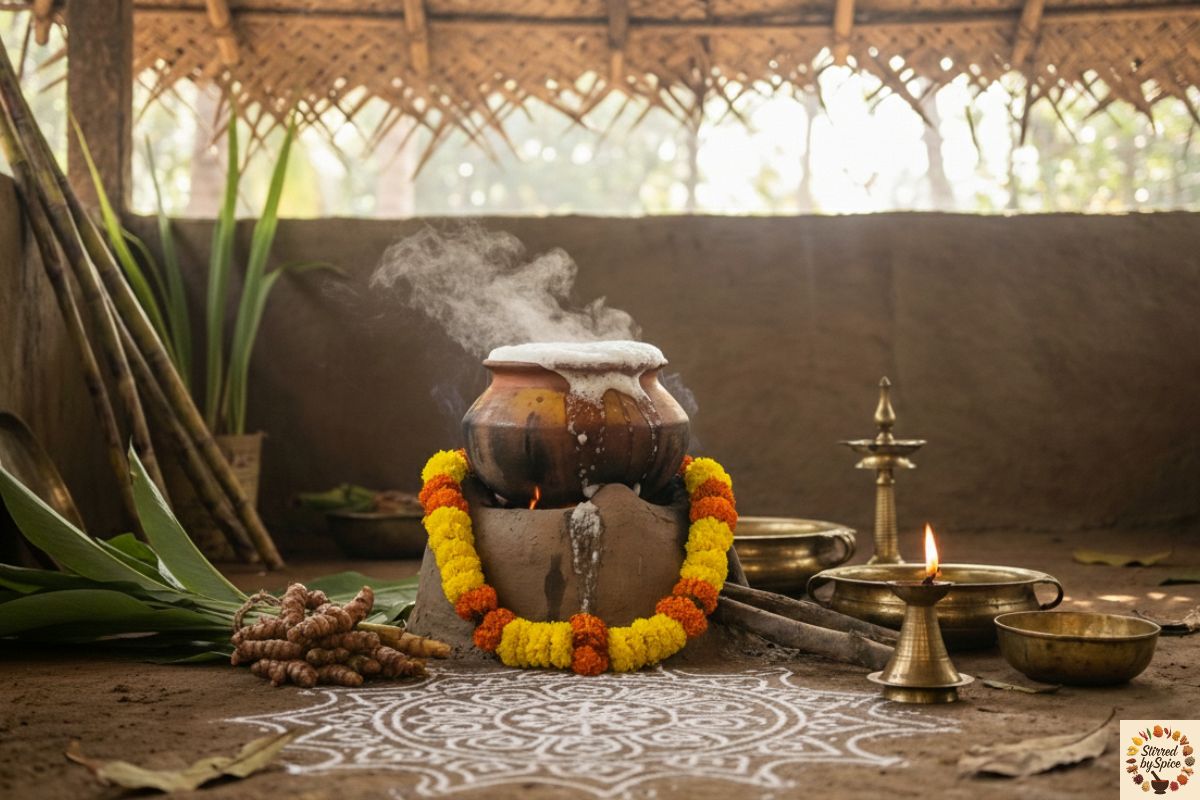
Photo by Stirred By Spice
🌞 What Is Pongal?
Pongal is a harvest festival celebrated primarily in Tamil Nadu and across South India. It marks the end of the winter harvest season and the beginning of
longer, brighter days as the sun begins its northward journey (Uttarayan).
But more than a date on the calendar, Pongal is a pause.
A pause to acknowledge what has grown.
A pause to give thanks — not through grand rituals, but through food.
Unlike festivals that center on indulgence or excess, Pongal celebrates balance. It honors everyday nourishment, seasonal ingredients, and the quiet abundance
of a well-fed home.
🌾 What Does “Pongal” Mean?
The word Pongal means “to boil over.”
On the morning of the festival, rice and milk are cooked together until they rise and spill gently over the pot. This moment is intentional — a symbol of
prosperity, fullness, and hope for the year ahead.
When the pot overflows, families gather and say “Pongalo Pongal!” — a simple expression of joy and gratitude.
It isn’t mess.
It isn’t waste.
It is meaning.
🥣 Why Food Is Central to Pongal
In South Indian culture, food has always been more than sustenance.
It is:
- How care is expressed
- How seasons are respected
- How values are passed down
Pongal food reflects this philosophy perfectly. The dishes are simple, warming, and deeply nourishing — built around rice, lentils, ghee, spices, and
seasonal produce.
There is no rush.
No plating for perfection.
Only intention.
Food during Pongal is cooked slowly, shared generously, and eaten together — often on banana leaves, seated on the floor, grounded and present.
🍚 The Dishes of Pongal (And What They Represent)
Each dish prepared during Pongal carries meaning, not just flavor.
Sweet Pongal (Sakkarai Pongal)
A celebratory dish made with rice, lentils, jaggery, ghee, and spices like cardamom.
It symbolizes abundance, sweetness, and gratitude — a reminder that life’s harvests are meant to be enjoyed and shared.
A comforting, savory preparation of rice and lentils cooked until soft, seasoned simply with black pepper, cumin, ginger, and ghee.
This is not festive food in the decorative sense. It is everyday comfort — grounding, digestible, and deeply satisfying.
Often served alongside Pongal, these dishes complete the meal — each offering contrast and balance.
- Idli brings softness and fermentation
- Vada adds texture and warmth
- Sambar ties everything together with spice, vegetables, and tang
Together, they reflect how South Indian meals are designed — not for excess, but for harmony.
🌿 Pongal Beyond the Plate
While food sits at the heart of Pongal, the festival extends into daily life.
Homes are cleaned and refreshed.
Kolams (rice flour designs) are drawn at doorsteps.
Sugarcane, turmeric plants, and fresh harvests are honored.
Cattle are thanked for their role in agriculture during Mattu Pongal.
These traditions reinforce a simple idea:
Gratitude isn’t abstract — it is practiced.
🪔 Why Pongal Still Matters Today
In a fast-moving world of convenience and constant consumption, Pongal feels quietly radical.
It reminds us that:
- Food comes from the earth, not shelves
- Seasons deserve respect
- Nourishment is not just physical, but emotional
For those living far from home, Pongal carries nostalgia — the memory of kitchens filled with warmth and familiarity.
For those discovering it anew, it offers something rare: a slower, more intentional way of relating to food.
🌾 The Bottom Line
Pongal teaches us that abundance doesn’t always arrive loudly.
Sometimes it looks like a pot of rice and milk, simmering patiently on the stove.
Sometimes it tastes like ghee, pepper, and warmth.
Sometimes it simply means being fed — and being thankful.
* If you’re curious to cook these dishes or understand the rhythms behind them, you’ll find the recipes linked above —
shared the way they’ve always been cooked: with care, not rush.
🧡 Meet the Heart Behind the Spice

Hi, I’m Maya Shetty — cook, storyteller, and spice lover.
Through Stirred By Spice, I share recipes that warm both the kitchen and the heart — where simple ingredients and warm flavors turn everyday meals into moments of connection.
💬 I’d Love to Hear From You!
Your words, memories, and reflections mean the world to me.
Share your thoughts using the form below — I read every message.
© 2025 Stirred By Spice | Designed with warmth 🌶️ & storiess 🪔. All rights reserved